
Trees
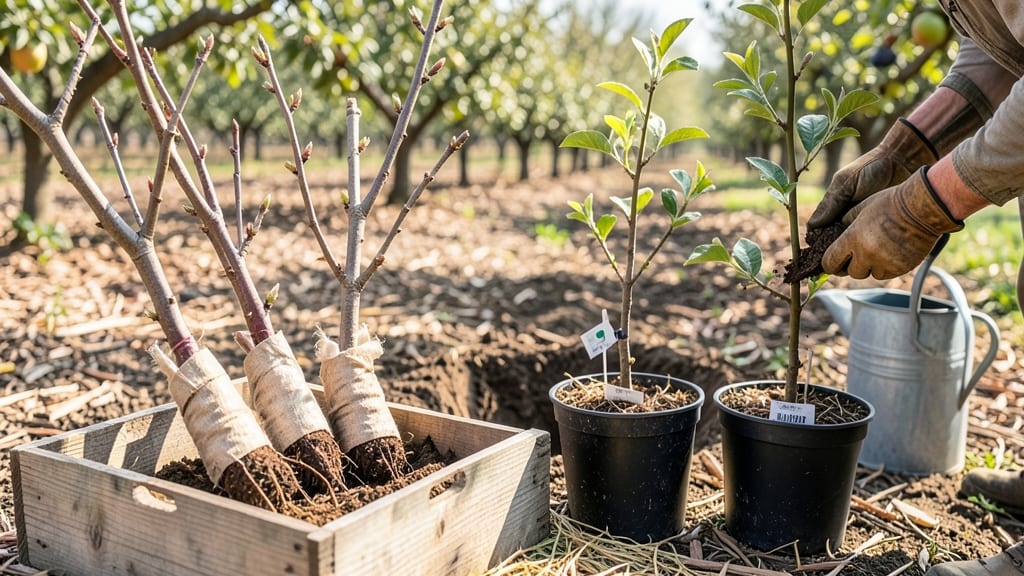
Timing your fruit tree planting in Washington isn’t just about grabbing a shovel—it’s about matching your young 🍎 to the state’s wild climate swings, from soggy Pacific Northwest winters to bone-dry Eastside summers.
Plant too early, and frost can stall roots; too late, and your tree might not establish before drought hits. But here’s the game-changer: knowing your zone’s chill hours and frost dates lets you pick the perfect window—whether you’re in Seattle’s damp Zone 7 or Yakima’s sunbaked Zone 5.
Why does this matter? Because Washington’s 5b-8b zones demand precision. A peach tree with 500 chill hours will thrive in Spokane but freeze in Bellingham. The ideal planting window—late winter to early spring (February–April) or early fall (September–October)—gives roots time to settle before summer’s heat or winter’s chill.
And yes, container-grown trees bend the rules, but bare-root saplings? They need that cool, moist soil to wake up strong.
Let’s cut to the chase: you’ll learn exactly which months work best for your corner of Washington, how to prep soil for heavy clay or sandy loam, and which fruit varieties align with your zone’s chill hours.
Whether you’re dreaming of juicy Rainier cherries or crisp Honeycrisp apples, getting the timing right means fewer headaches and more harvests. Ready to plant with confidence?
From microclimates that defy the zone map to the best mulch for water retention, I’ve got the pro tips to turn your backyard into a fruit orchard that actually pays off. No more guessing—just science-backed timing for trees that’ll reward you for decades.
Best planting months in Washington by climate Zone: Pacific Northwest vs. Eastern WA
Washington’s climate varies dramatically from the mild, wet Pacific Northwest to the colder, drier East, making planting timing critical for fruit tree success.
In Western WA (Zones 7-8), like Seattle or Bellingham, you can plant bare-root trees from November to early March when soils are cool but not frozen.
Meanwhile, Eastern WA (Zones 5-6), such as Spokane or Wenatchee, demands a narrower window—October to early April—to avoid late frosts that can damage emerging buds.
The key is aligning planting with soil temperatures and dormancy periods. In Western WA, late fall (October-November) is ideal for container-grown trees, while Eastern WA’s early spring (March-April) timing prevents winter desiccation.
Microclimates like the Cascade foothills or Columbia Basin may shift these windows by 2-4 weeks—always check local last frost dates (e.g., March 15 in Western WA vs. May 1 in Eastern WA).
For bare-root trees, prioritize dormant-season planting (November–March in West, October–April in East). These trees establish roots before spring growth, giving them a 30–50% survival advantage over summer-planted counterparts. Container-grown trees offer more flexibility but still thrive best when planted in early fall or late winter.
Soil temperature is your best guide: Aim for 40–50°F (4–10°C) at 6 inches deep. In Western WA, this often means October–December; in Eastern WA, September–November. Use a soil thermometer to confirm—cool soils prevent root shock and fungal diseases like Phytophthora, common in Washington’s wetter zones.
Microclimates add complexity. Urban areas like Seattle’s Eastside may have 10°F warmer winters than rural areas, while Yakima’s valley can experience frost pockets even in Zone 7.
Adjust planting by 1–2 weeks earlier in urban heat islands or delay in frost-prone valleys. Always research your specific USDA zone and elevation.
Another critical factor is chill-hour accumulation. Most Washington fruit trees need 200–1,000+ hours below 45°F (7°C) to flower properly.
Planting too late in Zone 5 (Eastern WA) risks insufficient chill hours for varieties like ‘Bing’ cherries, while Zone 8 (Western WA) may struggle with ‘Granny Smith’ apples if planted too early.
Here’s a quick rule of thumb: Plant in Western WA when soil temps drop below 60°F (15°C) (typically October–November), and in Eastern WA when daytime highs stay below 70°F (21°C) (usually September–October). This timing ensures roots establish before winter dormancy begins.
🌱Pro Tip: In Eastern WA’s dry climate, water deeply at planting and mulch with 6–8 inches of wood chips to retain moisture. Western WA’s high rainfall means prioritizing well-draining soil to prevent root rot.
| Region | USDA Zones | Best Planting Window | Soil Temp Threshold | Key Considerations | ||||||||||||||||||||||||||||||||
|---|---|---|---|---|---|---|---|---|---|---|---|---|---|---|---|---|---|---|---|---|---|---|---|---|---|---|---|---|---|---|---|---|---|---|---|---|
| Pacific Northwest | 7-8 | Nov–Mar (bare-root) / Oct–Dec (container) | 40–50°F (4–10°C) | High rainfall; amend clay soils | ||||||||||||||||||||||||||||||||
| Eastern WA | 5-6 | Oct–Apr (bare-root) / Sep–Nov (container) | 45–55°F (7–13°C) | Dry climate; mulch heavily | ||||||||||||||||||||||||||||||||
| Cascade Foothills | 6-7 | Sep–Nov (bare-root) / Oct–Dec (container) | 40–50°F (4–10°C) | Frost pockets; plant on south slopes | ||||||||||||||||||||||||||||||||
| Columbia Basin | 5-6 | Oct–Nov (bare-root) / Sep–Oct (container) | 50–60°F (10–15°C) |
Chill-hour requirements by fruit tree variety: matching trees to Washington’s zonesWashington’s diverse climate—from Zone 5b in the mountains to Zone 8b near the coast—means not all fruit trees thrive equally. Chill hours (the number of hours below 45°F a tree needs to break dormancy) are the key to selecting the right varieties. For example, ‘Rainier’ apples need 800–1,000 chill hours, while ‘Lapins’ cherries only require 200–400 hours. Matching your tree to your zone ensures strong blooms and heavy fruit sets. In Western Washington (Zones 7–8), where winters are mild, focus on low-chill varieties like ‘Suncrest’ nectarines (300–500 hours) or ‘Stanley’ plums (400–600 hours). Meanwhile, Eastern Washington (Zones 5–6) can handle high-chill varieties such as ‘Gala’ apples (600–800 hours) or ‘Montmorency’ tart cherries (700–900 hours).
If you’re unsure about your chill-hour total, check local weather records or use a chill-hour calculator (like the one from Washington State University Extension). For example, Spokane (Zone 6b) averages 700–900 chill hours, while Seattle (Zone 8a) gets only 300–500 hours. Planting a high-chill tree in Seattle could mean poor blooming or no fruit! Another pro tip: Microclimates matter. A south-facing slope in Eastern WA might add 100–200 extra chill hours compared to a valley floor. Conversely, urban heat islands near Seattle can reduce chill hours, making low-chill varieties even more critical. Always observe your yard’s unique conditions before selecting trees. For container-grown trees (often sold year-round), plant in early spring (March–April) to give roots time to establish before summer heat. Bare-root trees, however, must go in during dormancy (November–March) to minimize transplant shock. Both methods require well-draining soil and consistent moisture for the first 2 years to ensure strong root growth. Once your tree is planted, monitor its bud break in early spring. If buds swell too early (a sign of insufficient chill hours), your tree may struggle with late frost damage or poor fruit set. In that case, consider delayed pruning or shade cloth to protect blossoms until temperatures stabilize. |