Why I started Plant Grow Guide
I was twenty-four, kneeling in my grandfather’s old garden plot in rural Ohio, trying to coax life out of a packet of heirloom tomatoes I’d bought on a whim.
The soil was too dry, the seeds too shallow, and by the third week, I had nothing but a sad, cracked earth and a growing sense of failure.
My grandfather—who’d spent a lifetime turning that same stubborn land into something green—just shook his head and said, *‘You’re planting like you’re afraid of the dirt.’* That stuck with me.
So I started keeping notes. Not just what worked, but why it worked—or why it didn’t. I realized most gardening advice was either too vague (*‘give it sunlight’*) or too rigid (*‘plant in May, harvest in July’*), and neither fit the real world.
This site is for the people who’ve stared at a withered seedling and wondered, *‘What did I do wrong?’* It’s for the beginners with a windowsill and a dream, and the old hands who know their soil better than their own names.
Here, you’ll find the lessons I’ve learned the hard way, the mistakes I’ve made, and the little tricks that actually work.
Meet the founder

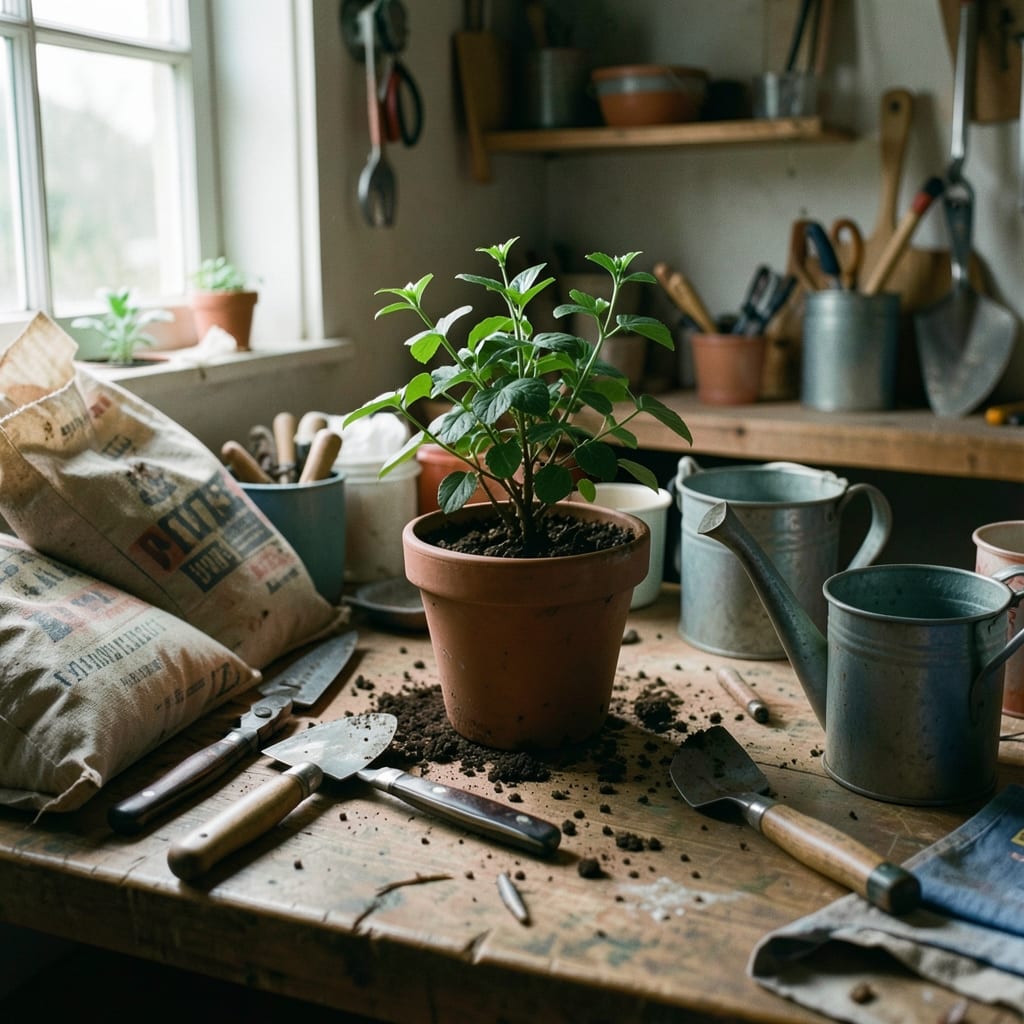
My grandfather’s old trowel is still in my toolbox, its wooden handle splintered from years of digging. He gave it to me when I was ten, after I’d spent an afternoon trying to plant marigolds in a straight line (they came up crooked, of course).
He said, *‘Plants don’t care about lines. They care about dirt and water.’* That trowel’s been with me through every failed seedling, every overwatered fern, and every time I swore I’d never garden again. It’s still here because it reminds me that the best lessons come from the mess.
I learned most of what I know from watching my grandfather work—how he’d run his fingers through the soil before planting, how he’d tilt his head to check the angle of the sun, and how he’d laugh when my rows looked like a drunkard’s scribble.
But the real education came from my own mistakes. Like the time I tried to grow peppers in a pot with no drainage, or the summer I ignored the frost dates and lost an entire bed of lettuce.
Every failure taught me something, and now I’m here to save you the same headaches.
There’s one habit I can’t shake: I still talk to my plants. Not in a *‘talking to plants makes them grow’* way—though if it does, I’m not complaining—but because it slows me down. I check the soil, adjust the water, and mutter about the weather like it’s a conversation.
My neighbors think I’m eccentric. I think it keeps me honest. If I’m not paying attention, neither are the plants.
My workspace is a sunlit corner of my apartment, where the windowsill gets six hours of light and the air smells like damp earth and basil.
The counter is always cluttered with seed packets, a battered notebook full of scribbled observations, and a mug of cold coffee that’s been there since yesterday. The light is the most important part—natural, always. Artificial grow lights work, but there’s something about real sunlight that makes a difference.
And if the plants are doing well, you’ll know it: the air smells like green things, and the room feels alive.
Meet the mascot

It started as a quick sketch on a napkin at my local coffee shop, while I was waiting for my third cup to kick in. I’d been trying to draw a seedling—just a sprout, really—but the first scribble looked more like a drunkard’s question mark than anything green.
I crumpled the napkin and started over, this time focusing on the curl of the first leaf and the way the stem wobbles when it’s young. That’s when I realized it didn’t need to be realistic. It just needed to *feel* alive.
The proper drawn version came later, on my sketchpad at home. I simplified the leaf into three clean lines, gave the stem a little bend (because nothing grows straight), and added a tiny dot for the seedling’s eye—just a suggestion of life peeking through.
The soil got textured with quick hatches, and the whole thing was meant to look like it was still pushing upward, like it hadn’t quite decided whether to break through yet. I called it *Sprout*—because that’s what it was: the first green breaking through.
The final version had to be simple enough to read at the size of a browser tab, so I stripped away everything that wasn’t essential. The leaf became two lines, the stem a single curve, and the soil just a few rough strokes.
The dot for the eye stayed, though—it’s the only part that’s always there, no matter how small the drawing gets. It’s a reminder that every plant starts as something tiny, something unsure, and that’s exactly where the magic begins.
What I promise you
This site exists to cut through the guesswork. If I tell you to water your basil until the soil is damp an inch down, that’s not a guess—it’s what I’ve tested, what I’ve seen work in my own hands.
No vague advice, no ‘maybe try this.’ Just the lessons I’ve learned, the ones that actually matter.
What you can hold me to
- Every guide includes what went wrong—and how to fix it. (Yes, even mine.)
- Soil, light, and water details are specific. No ‘plenty of sunlight’—just hours, angles, and what to watch for.
- Seasonal notes are real. If I’ve grown something in January, I’ll tell you how. If it’s a gamble, I’ll warn you.
- The failures are in here too. Some plants just won’t grow where I live, and I’m not going to pretend otherwise.
How I create a guide
A guide starts with a question—usually mine, but sometimes yours. *‘Why did my tomatoes split?’* *‘How do I keep my herbs alive through winter?’* I dig into the soil (or the books, or the internet), but I don’t stop there. I plant, I watch, I fail, and I try again.
The first draft is always messy: notes scribbled on the back of an envelope, half-finished sketches of what the plant *should* look like, and a growing list of things that didn’t work.
The real work begins when I sit down to write—and even then, I’ll rewrite a section if I realize I missed something.
The first step: planting with purpose
The first rule is never to rush. I start by testing the soil—pH, texture, drainage—because a plant struggling to root is a plant that’ll never thrive. If the soil’s too dense, I’ll mix in compost or sand; if it’s too sandy, I’ll add organic matter.
The seeds go in just deep enough so they’re covered but not buried, and I use my finger to press them gently into the earth. No packing it down like you’re building a road. The goal is to hold them in place without smothering them.
I water lightly afterward—just enough to settle the soil, not enough to wash the seeds away—and I keep the container or bed in a spot with indirect light for the first few days. Too much sun too soon will dry them out; too little, and they’ll rot.
I check daily, misting the soil if it feels dry at the top. The first true leaves (not the tiny seed leaves) are the signal I’ve been waiting for. If they don’t appear within the expected time, I’ll troubleshoot: Was the soil too cold? Did I overwater?
Sometimes, it’s just a matter of patience.
The second step: fixing what’s gone wrong
When things go off track—and they always do—I start by asking what changed. Was it the light? The water? A pest I didn’t see? Yellowing leaves mean too much water or not enough light; brown edges mean the soil’s too dry or the air’s too harsh.
I adjust one thing at a time. If the soil’s waterlogged, I’ll move the plant to a pot with drainage and let it dry out. If the leaves are wilting in the afternoon sun, I’ll provide shade until the plant’s stronger.
And if pests show up, I’ll treat it with neem oil or introduce beneficial insects before reaching for chemicals.
The key is observation. I keep a notebook by my garden, jotting down when I water, when I fertilize, and how the plants look each day. A sudden droop? A leaf curling? Those are clues.
I’ll compare what’s happening to what should be happening at that growth stage, and I’ll act fast. Most problems fix themselves if you catch them early—but only if you’re paying attention. That’s the part no one talks about: gardening isn’t just about planting.
It’s about watching, listening, and being ready to act.
How a guide gets onto this site
A guide isn’t done until it’s been tested in real conditions—my apartment, my balcony, my grandparents’ farm—and rewritten based on what actually happened. I’ll cut the fluff, sharpen the details, and make sure every step is something you can do with what you’ve got.
If a method fails in one place, I’ll note that. If it works in another, I’ll explain why. The notes I scribble while the plants are growing end up in the margins: *‘Basil hates cold drafts’* or *‘Tomatoes need a cage by week three.’* Those are the details that matter.
There’s always a second read, where I ask: *‘Would this have helped me when I was starting out?’* If the answer’s no, I’ll rewrite it. If a section feels too technical, I’ll break it down.
And if a guide doesn’t work the first time I try it again, I’ll go back to the drawing board. The goal isn’t perfection—it’s clarity. A guide should answer your questions before you even ask them. If it doesn’t, I’ll keep working on it.
Write to me
I love hearing about your successes, your failures, and the plants you’re trying to tame. Did my guide for growing peppers work for you? Did you try something and it went horribly wrong?
The contact page is where you’ll find me, along with the rest of the team who help make this site work. And if you’ve got a question that isn’t answered here, ask it. I’d rather solve a problem than leave you guessing.
Thanks for growing with me.
Adriana
The guides are grouped by category: Advice, Companion Plants, Flowers, How To, Lawn and Planting.