
Plants
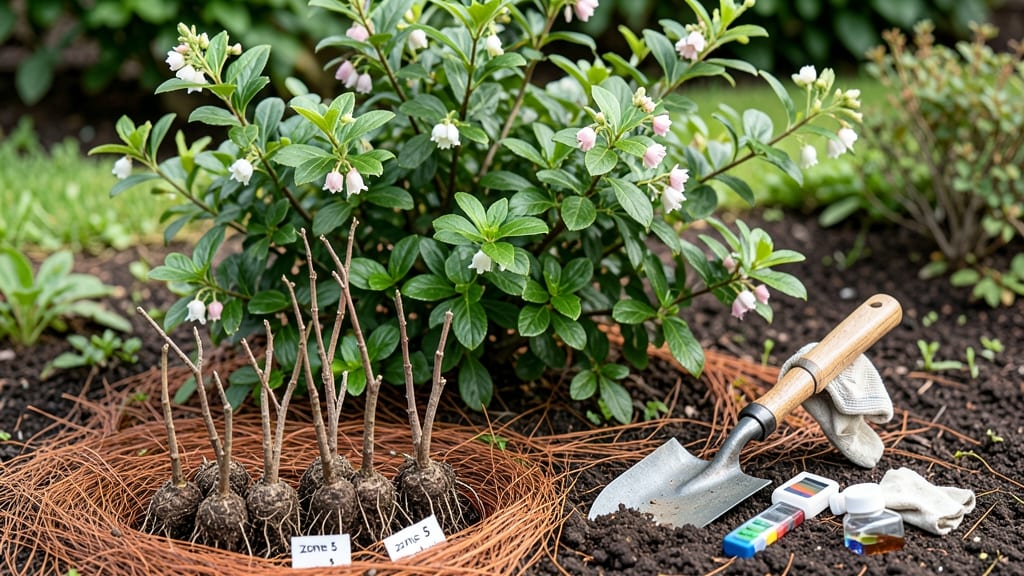
Knowing when to plant blueberries in Zone 5 can mean the difference between a thriving bush and years of disappointment. These 🫐 bushes need precise timing to match their chill-hour requirements with your local frost patterns, or you might end up with stunted growth or no berries at all.
Here's the truth: planting too early risks frost damage, while waiting too long can delay root establishment. The ideal window in Zone 5 is April through May or early September, when soil temperatures hit that sweet spot of 40-50°F for best results.
I'll walk you through exactly how to time your planting for maximum success, including how to adjust for late frosts and whether container planting changes the game. Let's get those blueberries growing strong!
You'll also discover the best varieties for your climate, soil prep secrets, and when to expect your first harvest. Ready to turn your backyard into a blueberry paradise?
Optimal planting window for blueberries in Zone 5: chill-hours explained
Blueberries in Zone 5 need precise timing because they rely on chill hours—the number of hours below 45°F they experience during dormancy. Most varieties require 400-900 chill hours, and planting outside this window can delay fruiting or reduce yields.
For example, 'Bluecrop' thrives with 600-900 hours, while 'Patriot' adapts to 400-600 hours.
In Zone 5, the ideal planting window aligns with soil temperatures between 40-50°F—typically early spring (April-May) or early fall (September). Spring planting lets roots establish before summer heat, while fall planting avoids drought stress and gives roots time to settle before winter dormancy.
Both windows work, but spring is often preferred for beginners.
Here’s why timing matters: Planting too early (before last frost) risks root damage from freezing, while planting too late (after soil warms above 60°F) stresses young plants. The key is matching your blueberries’ dormancy cycle with your region’s frost patterns.
For instance, northern Zone 5 (e.g., Chicago) may need to wait until mid-May, while southern Zone 5 (e.g., St. Louis) can plant by early April.
🌱
Blueberry Planting Timeline for Zone 5
| Season | Soil Temp | Chill Hours | Best Time to Plant | Root Establishment Risk |
|---|---|---|---|---|
| Early Spring | 40-50°F | 400-900 hrs | April 15–May 15 | Low (if after last frost) |
| Late Spring | 50-60°F | 400+ hrs | May 16–June 1 | Medium (stress risk) |
| Early Fall | 50-60°F | 400-900 hrs | September 1–15 | Low (roots settle before winter) |
| Late Fall | Below 40°F | N/A | Avoid (frost damage) | High |
Pro Tip: Use a soil thermometer to confirm temperatures before planting.
For bare-root blueberries, spring planting is ideal because roots can establish before summer heat. If you choose fall, plant at least 6-8 weeks before the first frost to allow roots to grow.
Container-grown blueberries are more flexible—they can handle slightly later planting (up to June 1) because their roots are already established.
Another critical factor is acidic soil preparation. Blueberries need a pH of 4.5-5.5. If your soil isn’t acidic, amend it with peat moss or sulfur 4-6 weeks before planting. This gives the soil time to adjust, ensuring your blueberries can absorb nutrients efficiently from day one.
Microclimates in Zone 5 can shift planting windows by 2-3 weeks. For example, a south-facing slope warms faster, allowing earlier planting, while a shady or urban area may need to wait until mid-May.
Check local frost maps (like the USDA Plant Hardiness Zone Map) and adjust accordingly. If you’re unsure, err on the side of planting later—roots are more forgiving than stems in cold soil.
Once planted, mulch with pine straw or wood chips to retain moisture and regulate soil temperature. This is especially important in Zone 5, where temperature swings can stress young plants. Mulch also suppresses weeds, reducing competition for nutrients during the critical first growing season.
🌿
If you’re planting multiple varieties, stagger your planting dates by 2-3 weeks to extend your harvest season. For instance, plant 'Jersey' (early season) in early April and 'Bluecrop' (late season) in mid-May. This ensures you enjoy berries from June through August instead of a single, short harvest window.
Finally, remember that container planting
Optimal planting window for blueberries in Zone 5: chill-hours explained
Blueberries in Zone 5 need 400–900 chill hours (temperatures between 32–45°F) to produce fruit. Planting too early or late disrupts root establishment and fruit set. The ideal window is when soil temps hit 40–50°F—typically mid-April to mid-May for spring or early September for fall.
Spring planting (after last frost) gives roots time to establish before summer heat. Fall planting (6–8 weeks before first frost) lets roots grow before dormancy. Bare-root plants adapt better than container-grown ones to these transitions.
| Stage | Action | Chill-Hour Needs |
|---|---|---|
| Spring Planting | After last frost (April 15–May 15) | 400–900 hours |
| Fall Planting | 6–8 weeks before frost (Sept 1–15) | 400+ hours |
| Soil Temp Threshold | 40–50°F (use soil thermometer) | Critical for root growth |
| Early Varieties | Plant by April 15 | 400–600 hours |
| Late Varieties | Plant by May 15 | 600–900 hours |
For container-grown blueberries, adjust timing by 2–3 weeks earlier—containers warm faster. Use a soil thermometer to confirm readiness; cold soil stunts roots. Northern Zone 5 (e.g., Minneapolis) plants later (May 1–15) due to longer frost risks.
Amend soil with peat moss or sulfur to lower pH to 4.5–5.5—blueberries hate alkaline soil. Mulch with pine needles to maintain acidity and moisture. Early-season varieties like 'Patriot' (400+ hours) thrive with spring planting, while 'Bluecrop' (600+ hours) benefits from fall prep.
Skip planting if frost is forecast within 2 weeks—roots need time to harden. Use row covers for early spring planting if nights dip below 32°F. Container growers can move pots to sheltered spots for extra protection.