
Plants
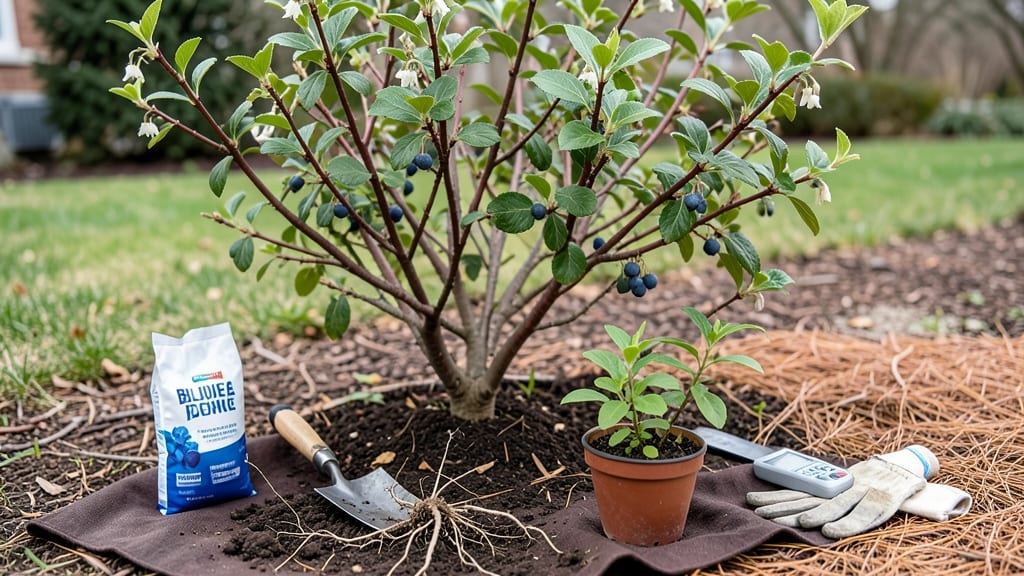
Planting blueberries in Kansas requires precision—get the timing wrong, and you could lose your entire crop to late frosts or scorching summer heat. The right window means the difference between thriving bushes and struggling plants that never bear fruit.
For Kansas gardeners in USDA Zones 5b-7a, the ideal time to plant is late winter to early spring—typically between February and April.
This gives your 🫐 blueberry bushes a head start before summer’s brutal heat sets in, while avoiding the risk of early frosts that can damage tender new growth.
But here’s the catch: Kansas’ unpredictable weather means you’ll need to adjust for your specific microclimate. Late frosts can linger into March, while heatwaves might arrive earlier than expected.
I’ll walk you through the exact steps to time your planting for success—plus how to prepare your soil and protect your plants from Kansas’ most common pitfalls.
Whether you’re a first-time grower or a seasoned gardener, these strategies will help you grow hardy blueberry bushes that survive—and thrive—through Kansas’ extreme seasons. Let’s get started.
Best planting windows for Kansas blueberries (USDA Zones 6b-7a)
Kansas’ USDA Zones 6b-7a create a tricky balance—late frosts in spring and intense summer heat demand precise timing for blueberry planting. Unlike coastal regions, Kansas lacks moderating ocean breezes, so your planting window must account for extreme temperature swings and alkaline soil challenges.
The ideal window shifts slightly between northern and southern Kansas, but most gardeners agree: late winter to early spring (February–April) offers the safest start.
Spring planting (March–April) is the gold standard for Kansas blueberries. By this time, the soil has warmed enough to support root growth, yet last frost dates (March 1 in Zone 6b to April 1 in Zone 7a) haven’t passed.
This timing lets bushes establish roots before summer’s 100°F heatwaves arrive. However, if you miss spring, fall planting (September–October) is a viable alternative—just be prepared for winter survival challenges in Zone 6b.
🌱 Pro Tip: Check your local frost dates via the Kansas State University Extension or Almanac’s Frost Calculator. In Zone 6b (e.g., Salina, Hays), aim for March 15–April 15; in Zone 7a (e.g., Wichita, Topeka), April 1–May 1 works best. Planting bare-root bushes in late winter (February) is also effective—they’ll dormant-root until spring warmth triggers growth.
| Planting Window | Best For | Kansas Zone Fit | Survival Strategy |
|---|---|---|---|
| Late Winter (Feb) | Bare-root plants | Zones 6b-7a | Mulch heavily (4–6" pine straw); protect with frost cloth if temps drop below 20°F. |
| Early Spring (Mar–Apr) | Container or potted plants | Zones 6b-7a | Acidify soil (pH 4.5–5.5) and water deeply 2x/week until established. |
| Fall (Sep–Oct) | Dormant bare-root | Zone 7a only | Avoid fall in Zone 6b; Zone 7a can plant by Oct 15 with extra mulch. |
*Zone 6b = Northern KS (e.g., Manhattan); Zone 7a = Southern KS (e.g., Wichita).
Fall planting in Kansas is risky but possible—only in Zone 7a (e.g., Wichita, Hutchinson) where first frosts hit October 15. Plant by mid-September to allow 4–6 weeks of root growth before dormancy.
However, Zone 6b gardeners should avoid fall planting entirely; the harsh winter (often -10°F) can kill young roots. If you’re in northern Kansas, stick to spring planting and use container growing for flexibility.
One critical mistake Kansas gardeners make? Planting too late in spring (after May 1). By then, the summer heat is already stressing young bushes. If you miss the ideal window, opt for container-grown blueberries—they’re easier to move if heatwaves arrive early.
Place containers in partial shade (e.g., under a 50% shade cloth) during July–August to protect roots.
Another Kansas-specific tip: Soil temperature matters as much as air temperature. Use a soil thermometer to confirm 45–55°F soil temps before planting.
In Zone 6b, this often means waiting until mid-April; in Zone 7a, early April is safe. Cold soil slows root growth, making bushes vulnerable to summer drought.
For container gardeners, the rules relax slightly. You can plant potted blueberries as late as May 15 in Zone 7a, thanks to the portability of containers. Move pots to shadier spots during heatwaves (>95°F) and water daily.
However, in-ground bushes planted after May 1 may struggle to fruit their first year due to heat stress.
💡 Heatwave Hack: If planting in late spring, choose Southern Highbush varieties (e.g., ‘Premier’, ‘Southern Snap’)—they tolerate heat better than Northern Highbush types. Pair them with drip irrigation to keep roots consistently moist during July–August.
Finally, don’t overlook microclimates. A south-facing slope in Zone 6b may warm up 2–3 weeks earlier than a north-facing yard. Use these warmer microclimates to extend your planting window by 1–2 weeks. Just be prepared to protect plants with frost cloth if late frosts hit after planting.
Best planting windows for Kansas blueberries (USDA Zones 6b-7a)
Kansas’ unpredictable frost dates and intense summer heat make timing critical for blueberry success. Planting too early risks late frost damage, while waiting too long can leave bushes struggling under 100°F+ heatwaves. The ideal window balances these extremes—typically late winter to early spring, but with regional adjustments.
For USDA Zone 6b (e.g., Wichita, Salina), aim for March 15-April 15 when soil temperatures reach 45°F+.
In Zone 7a (e.g., Topeka, Kansas City), extend your window to April 1-May 1, as later frosts are less likely. Bare-root plants should go in the ground before buds swell—typically by mid-April.
| Planting Window | USDA Zone | Key Consideration | Survival Tip |
|---|---|---|---|
| Late Winter (Feb 15-Mar 15) | 6b | Soil too cold; risk of frost | Wait until soil warms to 45°F (use a soil thermometer) |
| Early Spring (Mar 15-Apr 15) | 6b-7a | Optimal balance of frost risk and heat | Plant before buds break (typically by mid-April) |
| Late Spring (Apr 15-May 1) | 7a | Lower frost risk; higher heat | Mulch heavily to retain moisture for summer |
| Fall (Sept 15-Oct 15) | 6b-7a | Cooler temps; less heat stress | Water deeply before first frost to establish roots |
Fall planting (September 15-October 15) is a hidden gem for Kansas gardeners. Cooler temperatures reduce transplant shock, and bushes establish roots before winter dormancy.
However, avoid planting after October 15—new roots won’t harden off before frost. Zone 7a gardeners can push fall planting later due to milder winters.
Check Kansas State University’s frost maps for your specific location—some areas (like eastern Kansas) average 5°F warmer springs than western regions. If you’re unsure, err on the later side of the window to avoid frost damage. Container-grown blueberries offer flexibility; move pots indoors if frost threatens.
Pro tip: Use row covers or cold frames for early spring plantings in Zone 6b. These protect young shoots from 28°F+ dips while allowing sunlight to penetrate. Remove covers by mid-April to prevent overheating as temps rise.
Timing isn’t just about months—it’s about soil temperature, bud stage, and microclimate. For example, southern Kansas (Zone 7a) can plant 2-3 weeks later than northern Kansas (Zone 6b). Always verify with your local cooperative extension for hyper-local advice.