
Plants
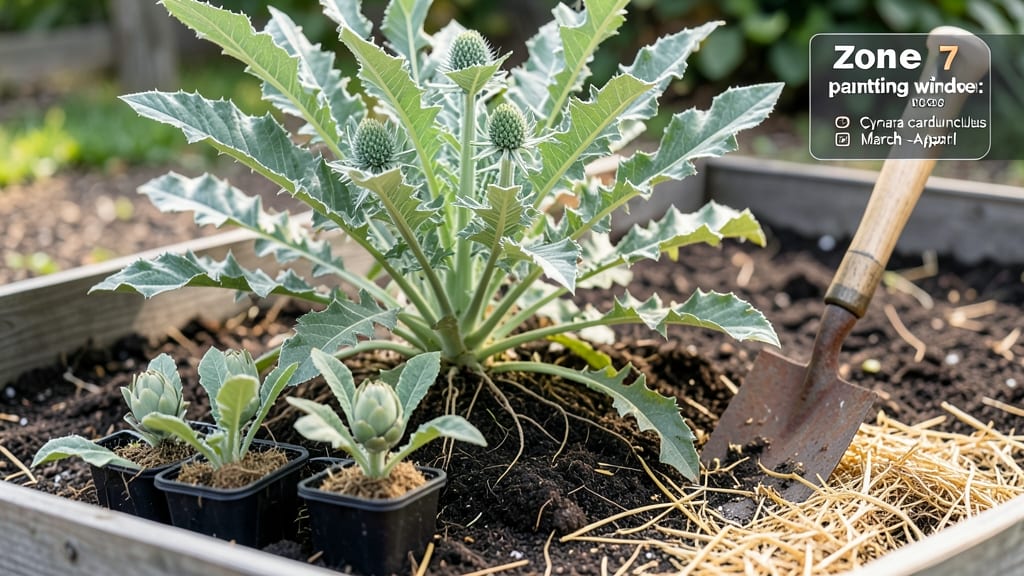
If you're dreaming of harvesting your own 🥬 artichokes in Zone 7 but keep ending up with bitter, bolted plants, timing is the game-changer you've been missing.
The key to success lies in matching your planting schedule with the 1,500-2,000 chill hours these Mediterranean divas demand - and getting it wrong means watching your investment turn into leafy disappointment.
Most gardeners in 7a-7b rush to plant too early, only to trigger premature bolting before buds even form.
I've learned the hard way that waiting until soil temperatures hit 60°F and all danger of frost has passed isn't just about avoiding cold damage - it's about giving your artichokes the perfect chill-hour head start they need to develop properly.
What you're about to discover is the exact March-April window that works for Zone 7, plus how to adjust for your specific microclimate. We'll cover everything from transplant timing to soil prep secrets that make the difference between a thriving perennial patch and another failed attempt.
Ready to stop guessing and start growing artichokes that actually produce? Let's dive into the science-backed planting schedule that's finally going to give you those perfect, tender buds you've been craving - without the frustration of bolted stalks.
Zone 7 artichoke planting calendar: exact dates for chill-hour compliance
Artichokes thrive in Zone 7 when planted at the precise moment they’ve accumulated enough chill-hours—typically 1,500–2,000 hours below 45°F (7°C). Miss this window, and your plants will bolt (flower prematurely) before producing edible buds.
The key is timing your transplant to align with your local chill-hour accumulation, usually between late February and early April.
In Zone 7a-7b, where last frost averages March 15, artichokes should be planted 4–6 weeks after frost—but only when soil temperatures hit 60°F (15°C).
This typically lands in mid-to-late March for most gardeners. However, microclimates (like urban heat islands or sheltered valleys) can shift this by 2–3 weeks.
If you’re starting from transplants (not seeds), your window narrows further. Young plants need 3–4 weeks to establish roots before hot summer temperatures arrive. Planting too early risks frost damage, while planting too late triggers bolting. Balance is everything!
For seed-starting indoors, begin 8–10 weeks before transplant (around January 15–February 1). Seedlings need 6–8 hours of light daily and consistent warmth (70°F/21°C) to avoid leggy growth. Harden off seedlings for 7–10 days before transplanting outdoors.
| Stage | Action | Zone 7 Timeline | Key Notes |
|---|---|---|---|
| Chill-Hour Accumulation | Monitor local temps (NOAA data) | Jan–Mar (1,500–2,000 hrs) | Use a chill-hour calculator for precision. |
| Seed Starting (Indoors) | Sow seeds in trays | Jan 15–Feb 1 | Use sterile seed mix and grow lights. |
| Transplant Window | Move seedlings outdoors | Mid–Late March | Soil must be 60°F+ (15°C+). |
| Frost Protection | Cover young plants | Until April 15 | Use frost cloth for 28°F (-2°C) nights. |
| Harvest Ready | Pick buds at peak | May–July | Harvest before buds open for best flavor. |
If you’re planting bare-root artichokes (common in Zone 7), your timeline shifts slightly. These dormant roots need 4–6 weeks to wake up, so plant them 2–3 weeks earlier than seedlings—around early March. Water deeply immediately after planting to encourage root regrowth.
For fall planting (a risky but possible strategy in Zone 7), aim for late August–early September. This gives plants time to establish roots before winter dormancy. However, most Zone 7 gardeners see better success with spring planting due to unpredictable fall frosts.
Pro tip: Use row covers or mulch to extend your planting window by 1–2 weeks in early spring. These tools protect tender seedlings from late frosts while keeping soil warm. Just remove covers once plants are 3–4 inches tall to avoid overheating.
Remember, artichokes are perennials in Zone 7—they’ll return year after year if given proper care. With the right planting timing, you’ll enjoy homegrown buds for 3–5 years from a single plant! 🌱
How to calculate your local chill-hours for perfect artichoke timing
Artichokes in Zone 7 need precise chill-hour tracking to avoid premature bolting. Most varieties require 1,500-2,000 chill-hours below 45°F (7°C)—but your microclimate might differ from the average. Without accurate tracking, you risk plants flowering too early or not at all.
Start by checking your local NOAA weather station data (try NOAA Climate Data or Local Weather Stations apps). Look for hourly temperature records from November through March, since this is when most chill-hours accumulate in Zone 7.
Many online tools, like Chill-Hour Calculators, can automate this process for you.
🌱 Pro Tip: Manual Calculation
If you prefer DIY: Multiply the number of hours each day below 45°F (7°C) by the difference from 45°F. Example: A 35°F (2°C) night = 10 chill-hours (45°F - 35°F = 10°F, then 10°F × 1 hour = 10 chill-hours). Sum these daily totals over the season.
Zone 7 gardeners often face microclimate variations—your backyard might be 100-500 chill-hours warmer than the official station. To adjust, place a minimum-maximum thermometer in your garden and compare it to the station data. If your garden runs 5°F warmer on average, subtract ~300 chill-hours from the total.
For transplant timing, aim to plant when your local chill-hour total reaches 80-90% of the variety's requirement. For example, if your Green Globe artichoke needs 1,800 chill-hours and you've accumulated 1,440 by late February, it’s safe to transplant.
Use frost cloth if nights dip below 32°F (0°C) after planting.
Monitor your plants closely after transplanting. If they start sending up flower stalks before April, they’re bolting too early—cover them with lightweight row fabric to block sunlight and delay flowering until late spring. This trick buys you 2-4 extra weeks of vegetative growth.
Remember: Chill-hours aren’t just about cold—they’re about consistency. Sudden warm spells in winter can reset the clock. Keep a garden journal to track your local patterns year after year for foolproof timing.