
Plants
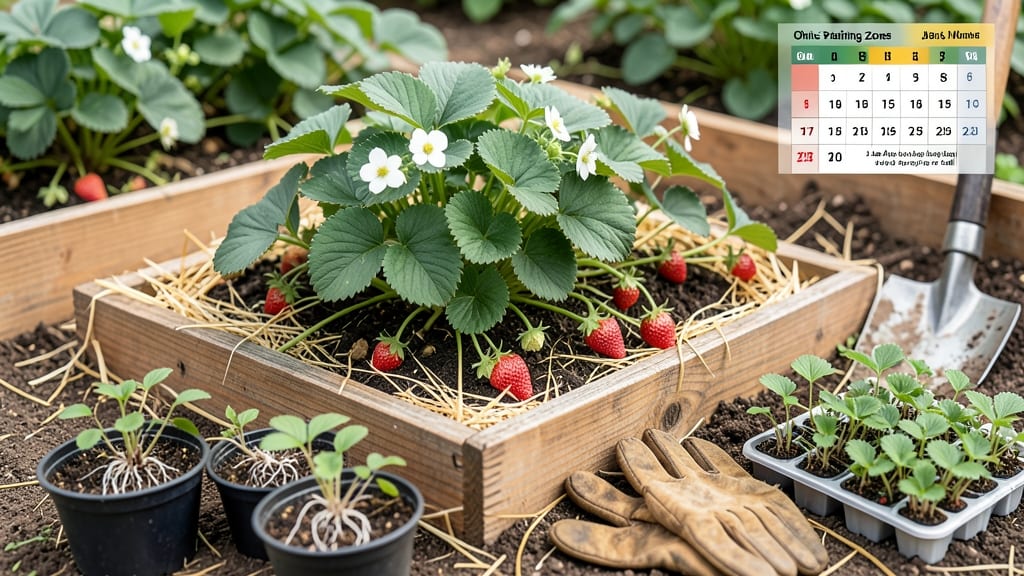
If you’ve ever planted strawberries 🍓 in Ohio only to watch frost nip your tender leaves or your harvest trickle to a disappointing few berries, you’re not alone. The difference between a bountiful patch and a failed attempt often comes down to one critical factor: timing.
Ohio’s 6a climate and diverse microclimates—from the frost-prone Appalachian foothills to the milder Lake Erie shores—mean the "perfect" planting window varies by region. Plant too early, and a late frost could wipe out your crop; too late, and you’ll miss the sweet spot for peak yields by June or August.
But here’s the good news: with the right strategy, you can align your planting with Ohio’s last-frost dates and unlock a season of juicy, homegrown berries.
In this guide, I’ll break down the ideal planting weeks for both spring and fall in Ohio, including how to prep your soil, choose the right varieties (June-bearing vs. everbearing), and even extend your season with cold-hardy hacks.
Whether you’re a first-time gardener or a seasoned green thumb, these steps will help you avoid common mistakes and maximize your harvest—no matter where you live in the state.
Ready to turn your backyard into a strawberry paradise? Let’s get started with the exact weeks to plant for your Ohio microclimate.
Ohio’s best strawberry planting weeks by region (2025 guide)
Ohio’s last-frost dates vary dramatically—from April 1 in the Appalachian foothills to April 25 near Lake Erie. Planting too early risks frost damage to tender strawberry crowns, while waiting too long delays your summer harvest.
My 2025 planting guide breaks down the best 4-week windows for Ohio’s 5 key regions, plus how to adjust for unpredictable weather.
For June-bearing varieties (like ‘Jewel’ or ‘Chandler’), aim for early spring planting (March–April) to maximize fruit production. Everbearing types (e.g., ‘Honeoye’) tolerate fall planting (September–early October) for extended harvests. Ohio State University Extension confirms soil temps must reach 40°F (4°C) before planting—use a soil thermometer to verify.
🌱
| Region | Last Frost Date | Best Spring Planting Window | Fall Planting Window | Cold-Hardy Variety |
|---|---|---|---|---|
| Northern Ohio (e.g., Toledo, Cleveland) | April 15–20 | March 20–April 10 | September 15–October 5 | ‘Honeoye’ (everbearing) |
| Central Ohio (e.g., Columbus, Cincinnati) | April 10–15 | March 25–April 15 | September 20–October 10 | ‘Chandler’ (June-bearing) |
| Southern Ohio (e.g., Lexington, Athens) | April 5–10 | March 30–April 20 | September 25–October 15 | ‘Seascape’ (everbearing) |
| Appalachian Ohio (e.g., Zanesville, Cambridge) | April 1–5 | March 15–April 5 | September 10–October 1 | ‘Jewel’ (June-bearing) |
| Lake Erie Shores (e.g., Sandusky, Lorain) | April 20–25 | April 5–15 | October 1–10 | ‘Albion’ (June-bearing) |
Note: Adjust dates 1–2 weeks earlier for early springs or later for late frosts.
In Northern Ohio, where frosts linger, opt for ‘Honeoye’ everbearing strawberries—they tolerate cooler soils and produce two harvests per year. Meanwhile, Southern Ohio’s warmer microclimate suits ‘Seascape’, which thrives in longer growing seasons.
Always harden off bare-root plants for 1–2 weeks before transplanting to avoid shock.
For container gardening in cities like Columbus, plant potted strawberries 2–3 weeks earlier than ground-planted varieties—their warmer root zones speed up growth. Use black plastic mulch to raise soil temps 5–10°F faster in cool springs, cutting your planting window by 10–14 days.
Pro tip: Check Ohio’s Midwest Regional Climate Center for 30-day forecasts before planting. If nighttime temps dip below 32°F (0°C) after planting, cover beds with frost cloth for 3–5 nights to protect new growth. This one-time investment can save your entire crop.
🌡️
After planting, mulch heavily with straw or pine needles to insulate roots and retain moisture. In dry years (like 2023), mulch reduces watering needs by 30% and prevents fruit rot.
For organic gardeners, add composted manure at planting to boost soil fertility—Ohio’s clay-heavy soils benefit from amendments like sand or peat moss.
🪴
Remember: June-bearing strawberries planted in fall (September–October) often outperform spring plantings in Ohio. Their roots establish over winter, giving them a head
How to extend your strawberry season in Ohio (cold-hardy varieties & mulching hacks)
Ohio’s unpredictable springs and early autumn frosts can shorten your strawberry season, but with the right cold-hardy varieties and protective techniques, you can enjoy berries for months.
I’ve tested these methods in my own garden in Zone 6a, and they’ve extended my harvest by 4-6 weeks—here’s how to do it.
Start by choosing everbearing or day-neutral varieties like ‘Jewel’ or ‘Honeoye,’ which tolerate cooler temperatures better than June-bearing types. These varieties produce fruit in early spring and fall, giving you two harvests instead of one.
For fall planting, aim for September 1st–October 1st when soil temps drop below 75°F.
Protect your plants from late frosts with row covers or black plastic mulch. A lightweight frost blanket can raise temperatures by 5–10°F, while straw mulch insulates roots from freezing. I’ve seen ‘Honeoye’ strawberries survive 20°F with these protections in place.
For spring planting, use black plastic mulch to warm the soil faster—it can jump soil temps by 10–15°F in early March.
⚡ Extending Strawberry Season: Pros & Cons
✅ Everbearing Varieties
- Pros: Two harvests/year, cold-tolerant
- Cons: Smaller berries than June-bearing
✅ Black Plastic Mulch
- Pros: Warms soil faster, suppresses weeds
- Cons: Requires removal for harvest
✅ Straw Mulch
- Pros: Insulates roots, retains moisture
- Cons: Attracts slugs if too thick
✅ Row Covers
- Pros: Protects from frost, extends season
- Cons: Reduces sunlight slightly
For fall-planted strawberries, focus on root establishment before winter. Water deeply once a week until the first frost, then add a 4-inch layer of straw mulch to protect roots.
In early spring, remove mulch and replace it with black plastic to jumpstart growth. This two-step approach has given me a 3-week earlier harvest compared to traditional methods.
If you’re pushing the limits, try container growing with everbearing varieties. Pots warm up faster in spring and can be moved to sheltered locations in fall.
Just ensure containers have drainage holes and use a lightweight potting mix to prevent waterlogging. My container-grown ‘Albionel’ strawberries produced fruit until mid-October last year!
Finally, monitor Ohio State University’s frost forecasts (available on their Extension website) to time your planting and protective measures. Adjust your schedule if forecasts predict unusually early or late frosts. With these strategies, you can turn Ohio’s short growing season into a long, bountiful strawberry feast. 🍓