
Plants
Virginia’s chill-hour zones: how to match strawberry varieties for best results
Virginia’s diverse climate—from the coastal plains to the mountains—creates distinct chill-hour zones, which directly impact strawberry varieties that thrive in your area. Chill hours (the number of hours below 45°F) determine whether your strawberries will produce fruit.
For example, June-bearing varieties need 500–1,000+ chill hours, while everbearing and day-neutral types adapt to 300–600 chill hours.
If you live in Zone 6a (coastal areas like Norfolk), opt for everbearing varieties like Albion or Chandler, which tolerate 400–600 chill hours. In contrast, gardeners in Zone 7b (Piedmont region) can grow June-bearing favorites like Allstar or Jewel, which require 600–900 chill hours.
Mountain regions like Zone 8a (Roanoke) can handle day-neutral varieties like Seascape or Tristar, which produce fruit with 300–500 chill hours.
Timing matters just as much as variety selection. In coastal Virginia (Zone 6a–7a), plant bare-root strawberries in late winter (February–early March) to avoid early spring frosts. Meanwhile, mountain regions (Zone 7b–8a) can plant as late as mid-April due to later frost dates.
Always check your local last frost date—planting too early risks frost damage to emerging plants.
Here’s how to match your strawberry varieties to Virginia’s chill-hour zones for a bountiful harvest:
| Region | Chill-Hour Zone | Best Varieties | Planting Window | Harvest Time |
|---|---|---|---|---|
| Coastal (Norfolk, Hampton) | 6a (400–600) | Albion, Chandler (everbearing) | Late Feb–early March | May–June |
| Piedmont (Richmond, Charlottesville) | 7a–7b (600–900) | Allstar, Jewel (June-bearing) | Mid-March–April | Late May–July |
| Mountains (Roanoke, Blacksburg) | 7b–8a (500–1,000+) | Seascape, Tristar (day-neutral) | Mid-April–May | June–August |
For gardeners in Zone 7a–7b, a mix of June-bearing and everbearing varieties extends your harvest season. For example, plant Allstar (June-bearing) in March for a late-spring harvest, then add Chandler (everbearing) in April for summer fruit.
This strategy maximizes your yield and keeps fresh strawberries on the table for months.
If you’re unsure about your chill-hour zone, use a chill-hour calculator or check with your local Cooperative Extension office. They provide hyper-local data, including microclimates that can shift chill-hour requirements by 100–200 hours within a few miles.
For instance, a south-facing slope in the Piedmont may accumulate 200 more chill hours than a nearby valley.
Pro tip: Bare-root plants are ideal for Virginia gardeners because they establish faster than potted varieties. Soak bare roots in lukewarm water for 30 minutes before planting to revive dormant roots.
If you prefer potted strawberries, choose 1-quart containers with well-drained soil and transplant them as soon as the soil warms to 50°F.
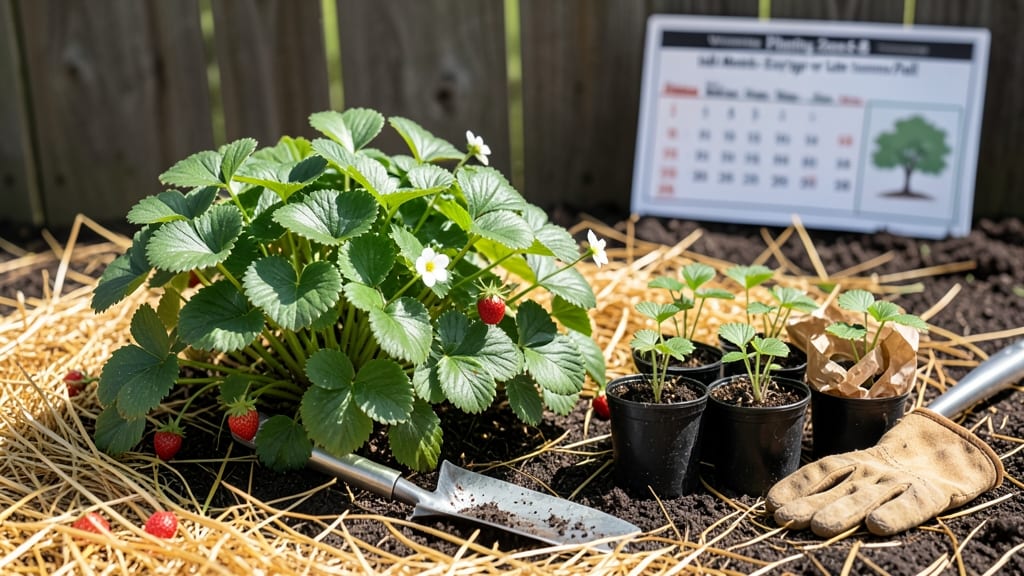
After planting, apply a 2–3 inch layer of straw mulch to insulate roots from temperature swings. This is especially critical in Zone 6a, where late frosts can linger into April. Mulch also suppresses weeds and retains moisture, reducing your watering workload by 30–40% during Virginia’s dry springs.
Once your strawberries are planted, monitor for flowering cues. If buds appear before 50°F nights, cover plants with frost cloth to protect blossoms. A frozen flower means no fruit—so timing your planting window to avoid this risk is key.
With the right variety and chill-hour match, your Virginia strawberry patch will reward you with sweet, juicy berries for years to come.
Step-by-step planting timeline for Virginia’s climate regions
Virginia’s three distinct climate regions—coastal, Piedmont, and mountain—each demand a tailored approach to strawberry planting. The key is timing: plant too early, and frost will kill tender roots; too late, and your harvest shrinks. Let’s break it down by region and month for peak yields.
For coastal Virginia (USDA zones 7b-8a), where winters are milder, focus on late February to early March planting. This gives plants time to establish roots before summer heat sets in. In the Piedmont (zones 6b-7a), aim for mid-March to early April—balancing frost risk with warm-up timing.
Mountain regions (zones 6a-6b) should plant late March to April to avoid late frosts.
🌱 Pro Tip: Always check your local last frost date (typically mid-March in most of Virginia) and plant 4-6 weeks beforehand. Use bare-root plants in winter or potted varieties in spring for flexibility.
📅 Virginia Strawberry Planting Timeline
- February (Coastal Only): Plant everbearing varieties in mild zones (7b+). Use black plastic mulch to warm soil.
- Mid-March: Piedmont & Coastal: Prepare beds with compost and mulch. Plant June-bearing varieties.
- Late March: Mountain Regions: Start planting day-neutral varieties. Protect with row covers if frost threatens.
- April (All Regions): Finalize plantings. Water deeply after planting and apply straw mulch (3-4 inches) to retain moisture.
- May: Remove mulch temporarily to encourage flowering. Fertilize lightly with 10-10-10 if growth stalls.
Adjust for microclimates: If you’re in a frost pocket (like the Shenandoah Valley), plant 2 weeks later than the general timeline. Conversely, urban heat islands (e.g., Richmond) may allow earlier plantings—monitor soil temperatures (45°F+ for root growth).
After planting, avoid heavy watering for the first week to prevent root rot. Instead, use a soaker hose to keep soil consistently moist but not soggy. In June-bearing varieties, expect first harvests in late May to June, while everbearing types produce two smaller crops (spring and fall).
🌿 Remember: Virginia’s humidity can lead to fungal diseases like gray mold. Space plants 12-18 inches apart and ensure good airflow between rows. For container growing, use large pots (12+ inches deep) with drainage holes.