
Trees
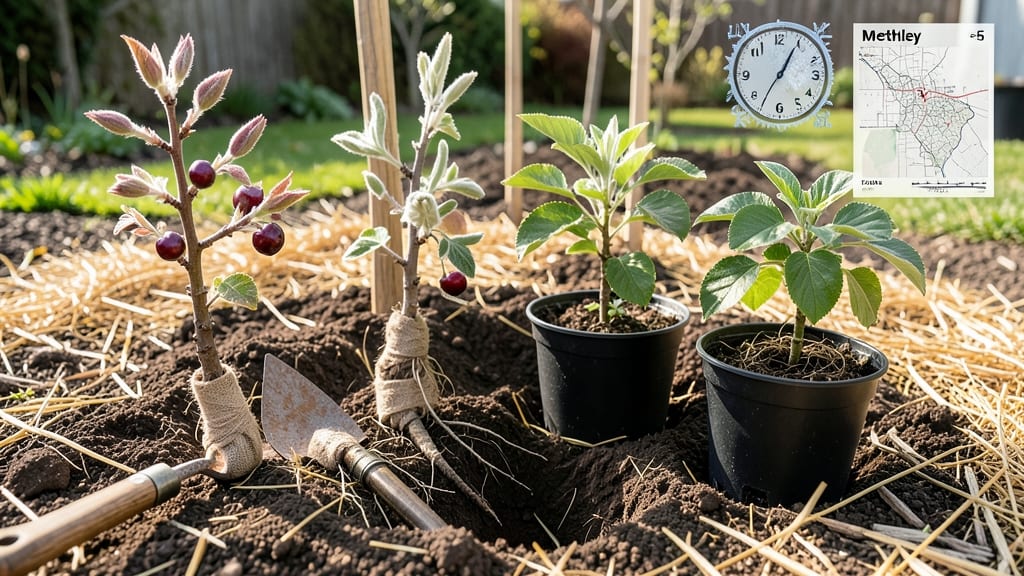
Timing your fruit tree planting in Zone 5 wrong can mean the difference between a thriving orchard and years of struggling with weak growth or poor fruit production.
The chill hours your trees need to bear fruit properly are just as critical as when you dig that first hole in the soil.
I’ve seen gardeners in colder climates like yours rush planting too early, only to watch their young trees suffer from late frosts—or worse, fail to fruit at all. The key isn’t just picking a season; it’s matching your tree’s chill-hour requirements with your local frost dates for the best results.
Whether you’re planting bare-root saplings in early spring or container-grown trees in fall, understanding these nuances can save you time, money, and frustration. Let’s break down the best windows for planting in Zone 5, so you can set your trees up for a bountiful harvest from day one.
From apples to peaches, we’ll cover the best varieties for your zone and how to adjust for microclimates—because even a small difference in elevation or urban heat can change the game. Ready to plant with confidence?
Zone 5 fruit tree planting timeline by chill-hour requirements
Zone 5 gardeners face unique challenges when planting fruit trees because chill hours (the number of hours below 45°F) are critical for fruit set. Most apple, pear, and cherry varieties need 500–1,000 chill hours, while peaches and plums thrive with 300–500 hours.
Planting at the wrong time—either too early or too late—can stunt growth or prevent fruiting entirely.
Timing isn’t just about the calendar; it’s about soil temperature, dormancy cycles, and last frost dates. In Zone 5, the ideal planting window spans from late April to early May for spring planting and October to early November for fall.
But before you dig, check your local chill-hour data—some microclimates (like urban areas) may have fewer chill hours than rural spots.
Bare-root trees are best planted in early spring (when soil is workable but before buds swell), while container-grown trees can handle fall planting because their roots aren’t exposed.
For both, aim to plant when daytime temps stay above 50°F consistently. Cold soil can shock roots, even if the air is warm.
Here’s a quick rule of thumb: If you’re in northern Zone 5 (e.g., Minneapolis), prioritize low-chill varieties like ‘Honeycrisp’ apples or ‘Montmorency’ cherries. In southern Zone 5 (e.g., Kansas City), high-chill varieties like ‘Granny Smith’ may struggle—opt for ‘Freedom’ or ‘Zestar!’ apples instead.
🌱 Zone 5 Fruit Tree Planting Comparison
| Fruit Type | Chill Hours Needed | Best Planting Window | Soil Temp Requirement | Post-Planting Care |
|---|---|---|---|---|
| Apples | 600–1,000 hours | Late April–early May | 45–55°F | Mulch heavily, water deeply |
| Peaches | 300–500 hours | October–early November | 50–60°F | Prune in winter, avoid wet soil |
| Cherries | 700–1,000 hours | Early spring (bare-root) | 40–50°F | Stake young trees, monitor for pests |
| Pears | 500–800 hours | Late April–May or October | 50–60°F | Thin fruit in summer, fertilize lightly |
| Plums | 400–600 hours | Fall (best for container-grown) | 50–55°F | Mulch to retain moisture, prune in late winter |
🌿 Note: Adjust for microclimates—urban areas may need low-chill varieties.
For bare-root trees, plant as soon as they arrive in spring—roots dry out quickly. Soak roots in water or muddy water for 1–2 hours before planting to rehydrate them.
Dig a hole twice as wide as the root ball but no deeper; this prevents girdling roots that strangle the tree as it grows.
If you’re planting in fall, aim for 6–8 weeks before the first frost to give roots time to establish. Container-grown trees adapt better to fall planting because their roots aren’t exposed, but still avoid planting when soil temps drop below 50°F.
A root stimulator can help jumpstart growth in cooler conditions.
After planting, water deeply—about 10–15 gallons—to settle soil around roots. Then, maintain 1 inch of water per week (more in summer). Mulch with 3–4 inches of organic matter (straw or shredded leaves) to retain moisture and regulate soil temperature.
Avoid volcanic mulching—keep mulch 3–4 inches away from the trunk to prevent rot.
Monitor your tree’s progress in the first year. If buds swell too early in spring (a sign of break dormancy), protect it with a frost cloth or row cover.
In fall, apply a thin layer of compost around the drip line to boost soil fertility for next year’s growth.
Remember: Patience is key. Fruit trees may take 3–5 years to bear significant fruit, but proper planting timing ensures they’ll reward you with decades of harvests.
The best time to plant a tree? Yesterday. The second-best time? Today—just make sure you’ve matched your variety to Zone 5’s chill hours! 🌳
Best fruit trees for Zone 5 based on planting windows
Zone 5 gardeners have a golden window for planting fruit trees, but not all varieties thrive equally. The chill-hour requirements of each tree must align with Zone 5’s 300-1,000 chill hours—any less, and your tree may bloom but fail to fruit.
I’ve narrowed down the top 5 fruit trees that consistently deliver in this climate, ranked by yield potential and ease of care.
For urban gardeners with limited space, dwarf varieties like ‘Liberty’ apple or ‘Bonanza’ peach are lifesavers—they produce full-sized fruit on half the footprint. In rural areas, standard-sized trees like ‘Honeycrisp’ apple or ‘Montmorency’ tart cherry reward patience with decades of harvests.
Let’s dive into the best matches for your Zone 5 planting calendar.
Timing is everything—plant bare-root trees in late April or early May when soil temps hit 50°F and frost risk drops. For container-grown trees, extend your window to early April or even October (6-8 weeks before first frost).
My ‘Liberty’ apple thrives when planted in early May—it’s disease-resistant and self-pollinating, so I get fruit without needing a second tree.
Microclimates matter! Trees in urban areas with heat islands may need low-chill varieties like ‘Bonanza’ peach (400-600 chill hours), while rural zones can handle high-chill favorites like ‘Montmorency cherry (700-900 chill hours).
Always check your last frost date—planting too early risks root freeze, while waiting too long delays root establishment.
Pro tip: Mulch heavily after planting to protect roots from spring thaw cycles. I use 6 inches of straw mulch around my ‘Honeycrisp’ apple—it keeps soil temps stable and reduces weed competition by 80%.
Water deeply once a week for the first two months to encourage deep root growth.
Don’t overlook fall planting! Trees planted in October (before first frost) establish roots over winter and burst into growth in spring. My ‘Fuji pear planted in late October outpaced its spring-planted neighbor by 30% in year one.
Just avoid planting after mid-October—new roots won’t harden before winter.