
Plants
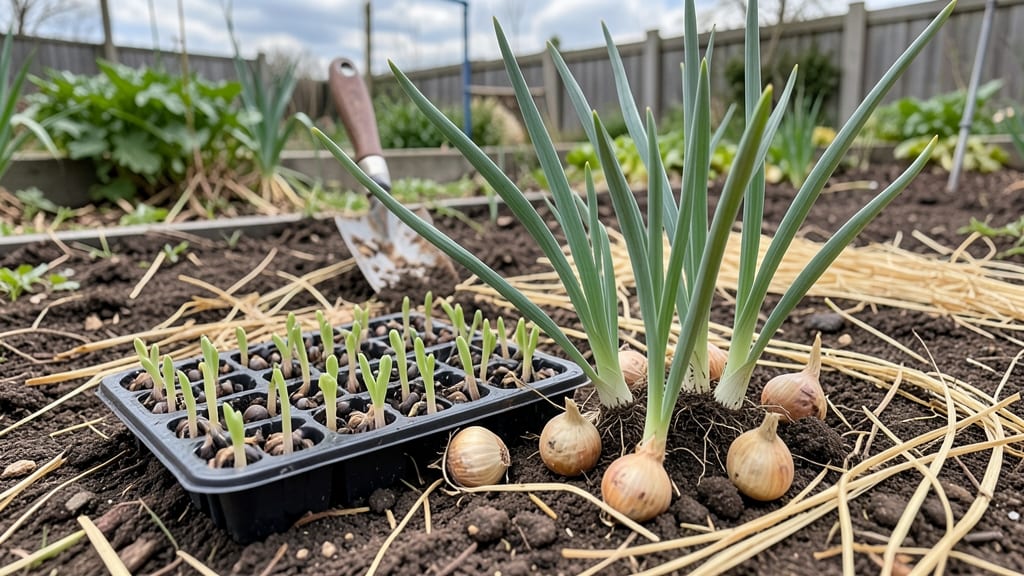
Georgia’s ideal onion planting calendar: month-by-month breakdown
Georgia’s mild winters and hot summers create a unique challenge for onion growers—get the timing wrong, and you’ll end up with bitter, bolting onions instead of sweet, storage-friendly bulbs.
The key is planting at the right time for your onion variety type (short-day, intermediate-day, or long-day) and adjusting for your specific USDA Zone 7b-8a region.
Most Georgia gardeners focus on two planting windows: late winter/early spring for summer harvests, and fall for overwintering varieties. But the exact dates depend on whether you’re growing onion sets (small bulbs) or onion seeds, as well as your local microclimate.
Let’s break down the perfect schedule to avoid those dreaded flowering stalks that ruin your harvest.
📅 Spring Planting (Primary Window): This is the most critical time for Georgia gardeners. Aim to plant 4-6 weeks before your last frost date (typically mid-February to early March in most of the state). For example, in Atlanta (Zone 7b), that means planting by February 28th, while in Savannah (Zone 8a), you can push it to March 15th.
| Month | Planting Window | Variety Type | Notes |
|---|---|---|---|
| February | Late Feb - Early March | Short-day & Intermediate | Best for Atlanta, Athens; avoid bolting |
| March | Mid-March - Early April | All types (sets/seeds) | Ideal for Coastal GA; harvest by June |
| September | Mid-Sept - Early Oct | Short-day only | Overwinter for spring harvest; mulch heavily |
| October | Late Oct (Zone 8a only) | Short-day sets | Risky; only for mild winters |
For spring planting, I recommend starting with onion sets (pre-grown bulbs) in late February, as they germinate faster than seeds and give you a head start on the growing season.
If you’re planting seeds, start them indoors 8-10 weeks before transplanting—typically by January 1st for most of Georgia.
One common mistake Georgia gardeners make is planting long-day onion varieties (like Yellow Sweet Spanish) too early. These varieties need 14+ hours of daylight to form bulbs, which Georgia doesn’t get until late spring. Stick to short-day or intermediate-day varieties like Texas Early White or Candy for reliable results.
🌡️ Fall Planting (Secondary Window): This is where Georgia shines—our mild winters allow for a fall harvest or overwintering crop. Plant short-day onion sets in mid-September to early October for a harvest the following spring. The key is to plant 8-10 weeks before your first frost (usually mid-November) and use heavy mulch (straw or leaves) to protect bulbs from freezing.
In Zone 8a areas (like Savannah or Brunswick), you can even try a late October planting of onion sets for an early spring harvest. Just be prepared to mulch aggressively and monitor for onion maggots, which thrive in Georgia’s warm winters.
I’ve had success with this method, but it requires weekly checks during mild spells.
Remember, Georgia’s soil temperatures are critical—onions won’t germinate well in cold, wet soil. Aim for soil temps above 50°F (use a soil thermometer to check). In North Georgia (Zone 7b), this might mean waiting until March 1st even if frost dates suggest earlier planting.
The extra week ensures your onions won’t rot in cold soil.
Pro tip: Mark your planting dates on a garden calendar and adjust yearly based on your local frost dates. Georgia’s climate is shifting, and what worked last year might not this year.
For example, 2023’s early spring had gardeners planting onions 3 weeks earlier than usual—leading to some bolting disasters. Stay flexible and observe your plants!
Finally, don’t forget about succession planting. In Georgia, you can often squeeze in two harvests: one from spring-planted sets (ready by June) and another from fall-planted overwintering onions (ready by April). This strategy keeps your kitchen stocked with fresh onions year-round.
How to adjust planting for Georgia’s microclimates and soil conditions
Georgia’s diverse climate—from the humid Coastal Plain to the milder Piedmont—means one-size-fits-all planting advice won’t work. Coastal areas like Savannah stay warmer longer, while inland cities like Athens experience earlier frosts. Adjust your onion planting schedule by 2-4 weeks based on your microclimate to avoid bolting or stunted growth.
For clay-heavy soils common in the Piedmont, amend with compost or sand to improve drainage. Sandy soils in Coastal Georgia? Add organic matter like peat moss to retain moisture. Test your soil’s pH—onions thrive in 6.0–7.0 range. If your soil is too acidic, mix in lime before planting.
Organic gardeners should focus on mulching (straw or grass clippings) to regulate soil temperature and retain moisture. Conventional growers can use plastic mulch in early spring to warm the soil faster. Both methods help extend the planting window by 1-2 weeks in cooler regions.
Warning: Heat stress is the #1 enemy of Georgia onions. If you’re in Zone 8b (like south Georgia), avoid planting in late April or May—temperatures above 85°F trigger bolting. Instead, opt for fall planting (September) or shade cloth in peak summer.
Georgia’s summer heat can cause onions to bolt prematurely. If planting in May-June, use 30% shade cloth to keep soil temps below 80°F. Coastal areas are 2-3°F hotter—adjust planting dates 2 weeks earlier than Piedmont regions.
If your soil stays waterlogged after rain, raise beds or plant onions on mounds. In drought-prone areas (like southwest Georgia), drip irrigation is a game-changer—keep soil consistently moist but never soggy. A 1-inch watering per week (more in summer) prevents bitterness and splits.
For container growing, use large pots (12"+ deep) with well-draining mix. Plant in March or September—containers heat up faster than ground soil. Move pots to partial shade if daytime temps exceed 85°F to delay bolting.
Pro tip: Mark your calendar for the average last frost date in your area (check Georgia Climate Toolkit for local data). For most of Georgia, that’s mid-March, but Coastal areas can plant 2 weeks earlier.
Adjust your fall planting (for green onions) to late August–September to harvest before frost.