
Plants
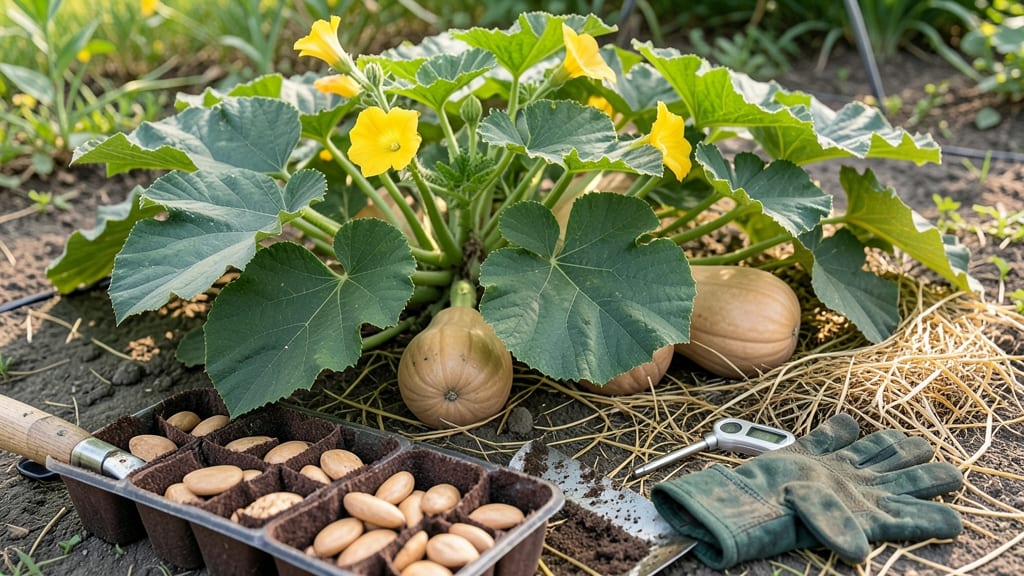
Timing your butternut squash seeds right in the UK is the secret to avoiding frost-killed seedlings and maximizing your harvest—because planting too early in chilly soil or too late in the season can mean the difference between a thriving 🎃 patch and wasted effort.
Most UK gardeners in zones 8-9 (like London or Cornwall) can start sowing outdoors between late April and early June, but Scotland’s cooler climate (zone 7b) often pushes ideal dates closer to May.
The key isn’t just the calendar—it’s waiting for soil to warm to at least 15°C (60°F), which happens weeks after the last frost.
In this guide, I’ll break down the exact planting windows for your region, plus how to use cloches or greenhouses to extend your growing season. You’ll also learn how to spot the perfect soil conditions and avoid common mistakes that ruin UK squash crops before they even start.
Whether you’re a beginner or a seasoned gardener, these tips will help you time your planting like a pro—so you can enjoy homegrown butternut squash from October to November without the guesswork.
UK butternut squash planting dates by soil temperature & frost risk
Timing your butternut squash seeds correctly in the UK means understanding two critical factors: soil temperature and frost risk. Seeds won’t germinate until the soil reaches at least 15°C (60°F), and young plants can’t survive light frosts.
These conditions vary dramatically across regions—from Cornwall’s mild climate to Scotland’s cooler summers.
In the UK, late April to early June is the general window for planting butternut squash seeds outdoors. However, this shifts based on your location.
Southern England (e.g., Cornwall, Devon) can start as early as mid-April when soil warms faster, while Scotland and northern England may need to wait until late May to avoid frost damage.
A soil thermometer is your best tool for precision. Stick it 5cm (2 inches) deep—this is where seeds will germinate. If the reading is below 15°C, hold off. Even if the air feels warm, cold soil will stall germination or cause rot.
I’ve seen seeds planted too early in chilly UK springs simply refuse to sprout for weeks!
Here’s how to translate last frost dates into actionable planting times. For example, London’s average last frost is mid-April, but I wait until early May to be safe. In Edinburgh, where frosts linger into May, I delay until late May or use cloches for earlier starts.
| Region | Last Frost Date | Ideal Planting Window | Soil Temp Check |
|---|---|---|---|
| Southern England (Cornwall, Devon) | Mid-April | Late April – Early May | 15°C+ (test 5cm deep) |
| London & Southeast | Early May | Early – Mid-May | 15°C+ (test 5cm deep) |
| Midlands (Birmingham, Manchester) | Late April – Early May | Mid-May | 15°C+ (test 5cm deep) |
| Northern England (Yorkshire, Lancashire) | Early May | Late May | 15°C+ (test 5cm deep) |
| Scotland (Edinburgh, Glasgow) | Late May | Late May – Early June | 15°C+ (test 5cm deep) |
| Wales (Cardiff, Swansea) | Early May | Early – Mid-May | 15°C+ (test 5cm deep) |
If you’re in doubt, err on the side of waiting. I’ve learned the hard way that cold soil can kill seeds before they sprout. For example, in 2022’s unusually cold May, my early-planted seeds in London rotted in the ground.
Since then, I’ve made it a rule to wait until the soil hits 16°C for extra safety.
Another trick is to use black plastic mulch to warm the soil faster. Lay it down a week before planting—it raises soil temperatures by 2-4°C, accelerating germination. This is especially useful in cooler UK regions like Scotland or the Midlands, where soil stays cold longer.
For container growing, timing shifts slightly. Potted soil heats up faster than ground soil, so you can plant 1-2 weeks earlier in containers. However, ensure your pots have drainage holes—waterlogged roots are a common issue in the UK’s damp climate.
Finally, track your local frost-free days. Butternut squash needs 165-200 days to mature, so count backward from your first expected frost (usually late October in most of the UK). This helps you calculate the latest safe planting date for a harvest before winter sets in.
UK butternut squash planting dates by soil temperature & frost risk
Timing your butternut squash seeds is critical in the UK—where soil temperature and frost risk can ruin your harvest before it starts. Unlike tropical climates, UK gardeners must wait until the ground warms to 15°C (60°F), as cold soil slows germination and invites rot.
The last frost date varies wildly: Cornwall can plant by early April, while Scotland often waits until late May.
Use a soil thermometer to confirm readiness—seeds won’t sprout reliably below 12°C (54°F), and roots struggle in waterlogged soil. Even if your local forecast says "spring," check the weather 7 days ahead for unexpected cold snaps.
A greenhouse or cold frame can shave weeks off your wait, especially in cooler regions like Yorkshire or the Highlands.
🌱
If you’re in doubt, start seeds indoors 4–6 weeks before your region’s last frost date. Use biodegradable pots to transplant seedlings without disturbing roots. Harden them off for 7–10 days before moving to the garden—this toughens young plants against UK’s unpredictable late-spring frosts.
Pro tip: Butternut squash needs 100–120 days to mature, so calculate backward from your first frost date. In Scotland, this might mean planting as late as June for a small harvest, while Cornwall gardeners can aim for April starts.
Always account for 2–3 weeks of buffer time for slow germination in cooler soil.
🌡️
For container growing, warm soil heats up faster—place pots on black plastic mulch or use a heat mat if your region runs late. Just remember: overheating soil (above 30°C) can stunt growth, so monitor closely during UK heatwaves. Balance is key!