
Plants
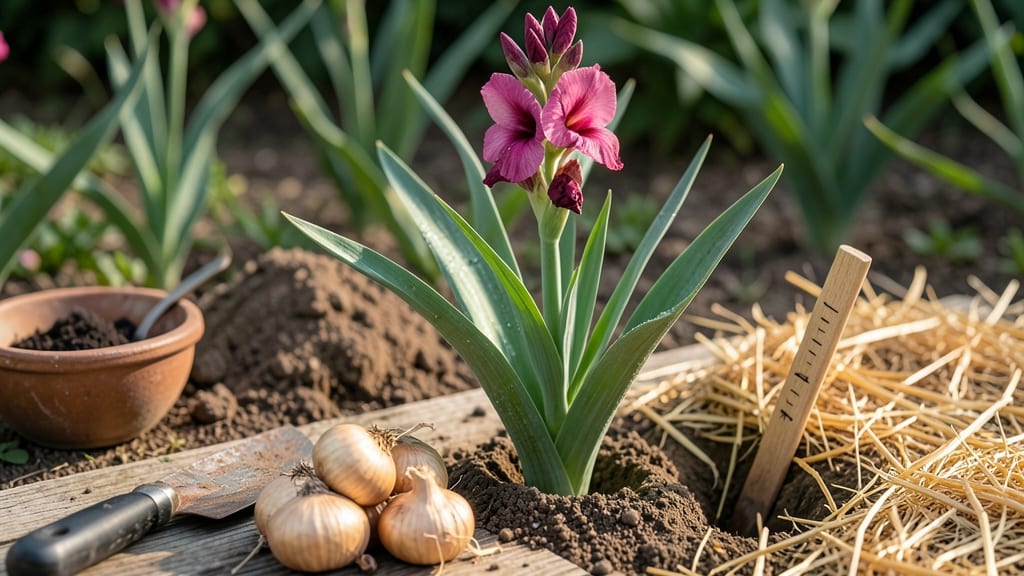
Colorado’s frost-free planting deadlines for gladiolus by elevation zone
Colorado’s diverse elevation zones create major challenges for gladiolus growers. What works in Denver (5,280 ft) may fail in Aspen (7,800 ft) or Colorado Springs (6,035 ft). The key is understanding your USDA zone (5-7) and local frost dates, which can vary by 2-4 weeks across the state.
Most Colorado gardeners aim for mid-April to mid-May planting, but high-elevation areas often need to wait until late May or early June.
Gladiolus bulbs are cold-sensitive and won’t survive frost. Even a light freeze (below 32°F) can damage emerging shoots. That’s why I always check the National Weather Service’s frost prediction maps for my specific area.
For example, Fort Collins (4,900 ft) typically has its last frost around April 20th, while Telluride (8,750 ft) might not be safe until June 1st.
Here’s how to determine your local planting window:
| Elevation Zone | USDA Zone | Last Frost Date | Safe Planting Window | Bloom Time |
|---|---|---|---|---|
| Lowland (3,000–5,000 ft) | 5-6 | Mid-April | April 15–May 10 | July–August |
| Foothills (5,000–7,000 ft) | 6-7 | Late April–Early May | May 1–May 20 | July–September |
| Mountain (7,000+ ft) | 7 | Late May–Early June | June 1–June 15 | August–September |
🌱 Note: Adjust 1–2 weeks earlier for south-facing beds or microclimates.
If you’re unsure about your local frost dates, I recommend using the Almanac’s Frost Calculator or contacting your local Cooperative Extension office. For example, Grand Junction (4,800 ft) often has earlier frost-free dates than Boulder (5,430 ft), even though they’re similar elevations.
This is due to urban heat islands and microclimates created by mountains.
For high-elevation gardens (7,000+ ft), consider heat-tolerant varieties like ‘Star of Natal’ or ‘Green Star’, which handle cooler soils better. These varieties can tolerate soil temps as low as 50°F, giving you a slightly longer planting window.
Always test your soil temperature with a soil thermometer—gladiolus bulbs need at least 60°F soil to sprout reliably.
Another pro tip: Stagger your planting by 2 weeks for continuous blooms. Plant half your bulbs at the ideal time, then add another batch 2 weeks later. This ensures you’ll have gladiolus flowers from July through September, regardless of your elevation. Just
After planting, mulch heavily with straw or shredded leaves to retain soil warmth. In high-desert areas, this can add 5–10°F to soil temps, helping bulbs establish faster. Avoid synthetic mulches—they can overheat soil and stress young plants.
Finally, remember that Colorado’s first frost typically arrives between mid-October and early November. This means your gladiolus will have 150–180 frost-free days to mature. If you’re in a short-season zone (like Telluride), focus on early-blooming varieties to maximize your growing window.
By following these elevation-specific guidelines, you’ll avoid the heartbreak of frost-damaged shoots or missed blooms. Next, we’ll cover how to adjust planting dates for early vs. late bloomers to extend your season even further! 🌸
How to adjust planting dates for early vs. late bloomers in Colorado
Colorado’s gladiolus season can stretch from July to September, but timing your planting is key to getting blooms when you want them. If you love early summer color, you’ll need to start bulbs indoors or use heat-tolerant varieties.
For late-season blooms, staggered planting and soil prep can make all the difference.
The trick lies in understanding your local microclimate and the growth cycle of your chosen gladiolus varieties. Some types, like 'Green Gables' or 'Picasso', mature faster (around 90 days), while others, like 'Black Star' or 'Dalmatian', take closer to 120-150 days to bloom.
This means your planting window shifts depending on the variety and your elevation zone.
For high-elevation gardens (7,000+ ft), where summers are shorter, focus on early-maturing varieties or extend the season with black plastic mulch to warm the soil. In lower elevations (3,000–5,000 ft), you’ve got more flexibility—plant early varieties in late April and late bloomers in mid-May for a continuous display.
Here’s how to fine-tune your approach for staggered blooms and heat management in Colorado’s climate:
🌱 3 Key Strategies for Adjusting Gladiolus Planting Dates
- Staggered Planting: Plant early varieties in late April and late varieties in mid-May for blooms from July to September.
- Soil Warming: Use black plastic mulch in high-elevation zones to raise soil temps by 5–10°F and extend the growing season.
- Heat-Tolerant Varieties: Choose drought-resistant types like 'Red Beauty' or 'White Friendship' for 7,000+ ft elevations.
If you’re aiming for early blooms, start bulbs indoors in late February under grow lights. Transplant them outdoors 2–3 weeks before your last frost date to give them a head start.
For late-season color, plant bulbs in early June—they’ll need full sun and consistent watering to compensate for the shorter daylight hours.
One common mistake is assuming all gladiolus varieties have the same timeline. For example, 'Applause' (a mid-season bloomer) planted in mid-May might not flower until late August, while 'Pink Parfait' (early) could bloom as early as July if planted in late April.
Always check the days-to-bloom label on your bulbs to avoid disappointment.
For container gardening in Colorado, adjust your timeline by 1–2 weeks earlier since pots heat up faster and dry out quicker. Place containers in south-facing spots and use self-watering systems to keep roots consistently moist.
With the right variety and timing, you can enjoy gladiolus blooms from July through frost, even in Colorado’s challenging climate.
Don’t forget to cut back foliage after blooming and dig up bulbs before the first frost to store them indoors. This protects them for next year’s extended-season planting strategy.
🌿