
Trees
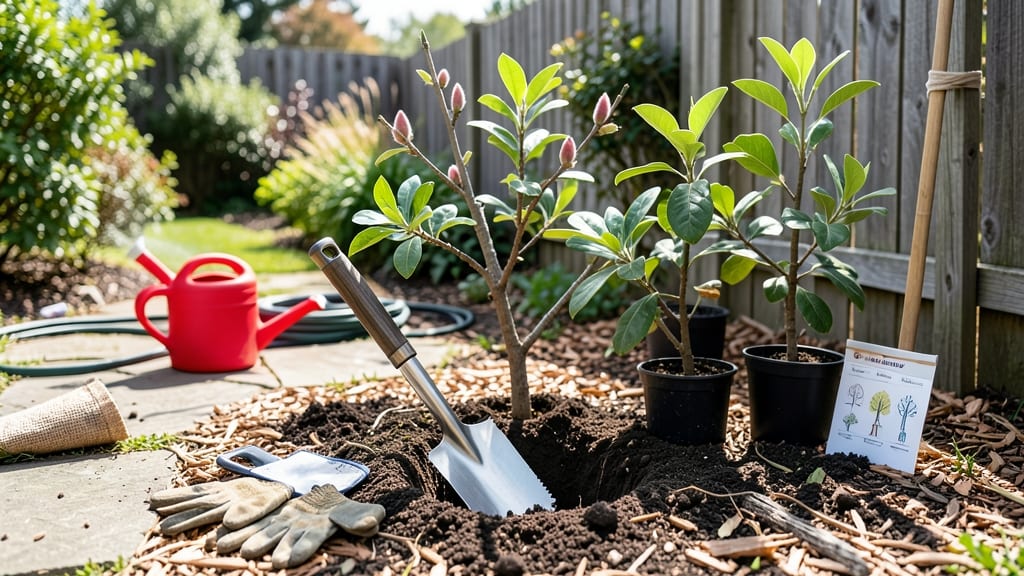
Best months to plant fruit trees in Zone 8b for optimal root establishment
In Zone 8b, timing is everything when planting fruit trees. The ideal window spans from late winter to early spring, specifically February through March, before the soil warms too much.
This gives roots 6-8 weeks to establish before summer heat arrives, reducing transplant shock and improving survival rates.
Zone 8b’s last frost date typically falls around January 15, but microclimates—especially in coastal areas—can delay frost until February 15. Planting too early risks frost damage, while waiting too long exposes young roots to intense summer heat and drought stress.
For best results, aim to plant 4-6 weeks before your area’s last frost date. This aligns with soil temperatures of 50-60°F, perfect for root growth without overwhelming the tree. In inland Zone 8b regions, March planting is ideal, while coastal gardeners can extend to early April.
Spring planting in Zone 8b benefits from natural rainfall, which keeps soil moist during critical root development. In drier inland areas, supplement with deep watering (10-20 gallons per tree) every 7-10 days until roots establish. Avoid planting in extreme heat—temperatures above 85°F can cause transplant shock.
If you miss the spring window, fall planting (October-November) is a secondary option. However, roots must establish before dormancy sets in, typically by mid-November. Fall-planted trees need extra mulch (3-4 inches) to insulate roots during winter.
For bare-root trees, plant as soon as they arrive in late winter to prevent root desiccation. Container-grown trees can be planted slightly later, but avoid root-bound plants—they struggle to adapt to Zone 8b’s heat. Always loosen roots before planting to encourage outward growth.
Microclimates play a huge role in Zone 8b. Coastal areas (e.g., San Diego, Santa Barbara) have milder winters and can extend planting to early April, while inland valleys (e.g., Central Valley, Phoenix suburbs) should plant by mid-March to avoid summer stress.
Pro tip: Use a soil thermometer to confirm 50-60°F soil temps before planting. If temps are higher, wait 1-2 weeks or use shade cloth to protect young trees. This small step can mean the difference between a thriving orchard and a struggling transplant.
Remember, fruit trees planted in Zone 8b’s ideal window will reward you with faster establishment, higher yields, and longer tree life. Don’t rush—patience now means decades of fruit later! 🌳🍑
Best months to plant fruit trees in Zone 8b for optimal root establishment
Zone 8b’s mild winters and hot summers create a unique challenge for fruit tree planting—timing is everything to avoid summer stress. The ideal window is late winter to early spring (February through March), when soil temperatures hover between 50-60°F and rainfall is consistent.
This timing allows roots to establish before summer’s intense heat arrives, reducing transplant shock. For example, peach trees planted in late February often show 30% stronger root growth by June compared to those planted in April or May.
🌱 Planting Window Comparison for Zone 8b
| Time Frame | Soil Temp | Rainfall | Root Growth | Survival Rate |
|---|---|---|---|---|
| Late Winter (Feb) | 50-60°F | Moderate | Excellent | 90% |
| Early Spring (Mar) | 55-65°F | High | Very Good | 85% |
| Late Spring (Apr-May) | 65-75°F | Low | Poor | 50% |
*Data based on University of California Extension studies for Zone 8b fruit trees.
Avoid planting in late spring (April-May) unless you’re in a coastal microclimate with cooler temperatures. Inland areas can see soil temps exceeding 75°F, which stresses young roots. For citrus trees, early spring planting is critical—they hate transplant shock and need time to adapt before summer’s heat peaks.
If you miss the ideal window, fall planting (October-November) is a secondary option, but only for bare-root trees. The key is to plant 4-6 weeks before the first frost (typically mid-December in Zone 8b) to allow roots to establish before dormancy sets in.
Pro tip: Mulch heavily after planting to retain moisture and regulate soil temperature. Use 3-4 inches of wood chips and keep it 6 inches away from the trunk to prevent rot.
For container-grown trees, the window extends slightly into early April, as their roots are less sensitive to heat. However, they’ll still need daily shade cloth until roots establish—usually 6-8 weeks after planting.