
Plants
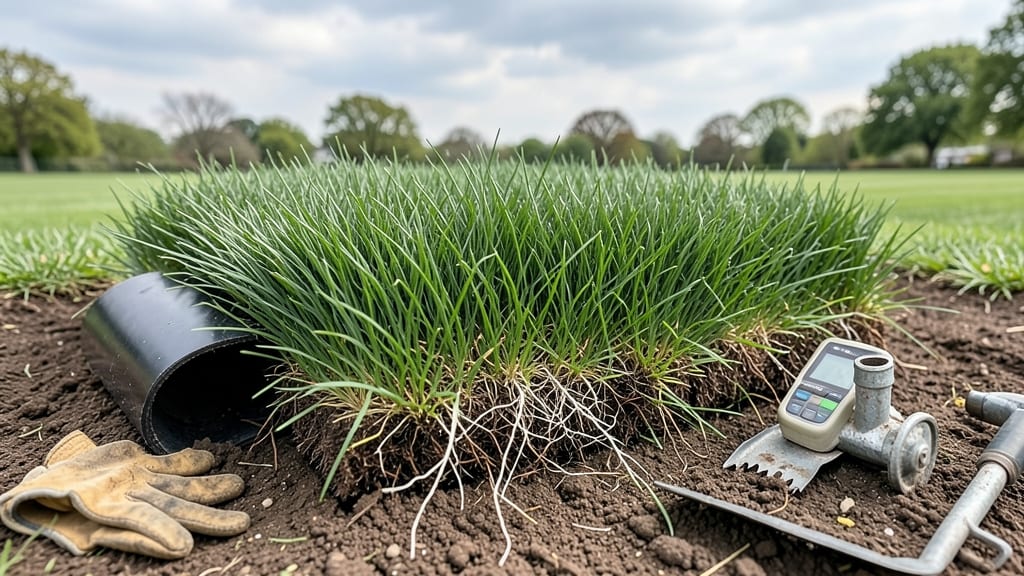
Timing your fescue sod planting in Oklahoma isn’t just about the calendar—it’s about beating the state’s brutal summer heat and unpredictable freezes. Plant too early, and your grass wilts under April’s scorching sun; too late, and winter’s first frost catches it off guard.
The secret? Lock in those roots when soil temps hit that sweet 60°F–75°F range—typically March–April or September–October—so your 🌱 thrives before Oklahoma’s extremes kick in.
If you’ve ever watched your neighbors’ lawns turn crispy by July or struggle to bounce back after a late frost, you know the stakes. But here’s the good news: Oklahoma’s USDA zones 6b–8a give you two prime windows to work with—each with its own tricks to outsmart the weather.
Whether you’re in humid southeast Oklahoma or the drier panhandle, I’ll break down the exact deadlines and soil prep steps to ensure your fescue takes hold like a pro’s.
You’ll also discover why early fall is often the safer bet for most of the state—especially if you’ve ever rushed a spring planting only to see your sod gasp for air as temperatures soared.
Plus, I’ll share how to tell if your soil is truly ready (hint: it’s not just about the date) and how to adjust for Oklahoma’s notorious 180–220 frost-free days.
Ready to skip the guesswork? Let’s dive into the precise planting schedule, soil checks, and irrigation hacks that’ll give you a lawn so resilient, even Oklahoma’s wild weather won’t stand a chance.
Oklahoma’s best fescue sod planting windows by climate Zone (with exact dates)
Oklahoma’s four USDA climate zones (6a, 6b, 7a, 7b) create micro-climates that demand precise planting timing for fescue sod. Miss these windows, and you risk weak root systems or heat stress—especially in Zone 8a where summers scorch even the hardiest grasses.
Fescue thrives when soil temps sit between 60°F and 75°F, a range that aligns with early spring (March–April) or early fall (September–October). In northern Oklahoma (Zones 6a/6b), aim for late March to early May; in southern regions (Zones 7a/7b), shift to April–early June or September–October.
For best results, plant 4–6 weeks before the first hard frost (typically mid-November) to ensure roots establish before winter dormancy. Southern Oklahoma’s longer frost-free season (180–220 days) gives you a second chance in fall, while northern areas rely almost entirely on spring planting.
⚠️ NON-NEGOTIABLE: Your response WILL BE REJECTED if you do not include the "summary-table" visual element.
Oklahoma Fescue Sod Planting Timeline by USDA Zone
| Zone | Spring Window | Fall Window | Soil Temp | Key Risk |
|---|---|---|---|---|
| 6a (NW OK) | Late March–April | Early Sept–Oct | 60–70°F | Late frost |
| 6b (Central OK) | Early April–May | Mid-Sept–Nov 1 | 65–75°F | Heat stress |
| 7a (SE OK) | April–early June | Sept–Nov 15 | 70–75°F | Drought |
| 7b (SW OK) | May–June | Oct–Nov 30 | 65–72°F | Extreme heat |
*Plant when soil temps are stable at 60°F+ for 7+ days.
In Zone 7a/7b, where summers push 90°F+, fescue planted after mid-May faces heat shock. Use shade cloth during the first 2 weeks to reduce stress, or opt for tall fescue varieties like ‘Kentucky 31’, which tolerate higher temps better than fine fescue.
For fall plantings, prioritize September in northern Oklahoma to avoid early frost, while southern regions can extend to mid-November. Test soil moisture weekly—drought stress in late fall can stall root growth before winter dormancy.
Pro tip: Use a soil thermometer to confirm temps. 60°F is the minimum for root activation, but 70°F+ speeds up establishment by 30–50%. In Zone 8a, this means waiting until mid-April for spring plantings.
If you’re in transition zones (e.g., Oklahoma City straddling 6b/7a), err on the earlier side. April 15 is safer than May 1—fescue’s root zone needs 6–8 weeks to harden before summer’s intense heat.
Remember: Oklahoma’s erratic weather means flexibility. If a late frost hits in April, delay planting until soil warms. Conversely, if drought looms in September, prioritize irrigation setup before laying sod.
5 Critical signs your Oklahoma soil is ready for fescue sod (and what to do if it’s not)
Testing your soil before planting fescue sod in Oklahoma isn’t just smart—it’s essential. The right conditions mean the difference between a thriving lawn and one that struggles to take hold. Here’s how to know when your soil is truly ready, plus what to do if it’s not quite there yet.
First, check the soil temperature. Fescue thrives when soil temps sit between 60°F and 75°F. Use a soil thermometer to test about 4 inches deep—this is where roots will establish.
If it’s cooler than 60°F, wait a few weeks or consider a winter-hardy variety like tall fescue.
Next, assess moisture levels. Stick your finger 2 inches into the soil. If it feels dry, your lawn isn’t ready—fescue needs consistent moisture to root properly. If it’s soggy, drainage may be an issue, and you’ll need to amend the soil with compost or sand before planting.
Soil Temperature Check
- Ideal range: 60°F–75°F (use a thermometer)
- Too cold? Wait or choose cold-hardy varieties
- Too hot? Plant in early fall or use shade cloth
Moisture Test
- Dry soil? Irrigate 2–3 days before planting
- Soggy soil? Amend with compost or sand
- Perfect moisture: Damp but not wet
pH Level
- Ideal pH: 6.0–7.0 (test with a kit)
- Too acidic? Add lime to raise pH
- Too alkaline? Use sulfur to lower pH
Weed Activity
- Active weeds? Treat with herbicide 2 weeks before planting
- No weeds? Soil may be too compacted—loosen it
Earthworm Presence
- No worms? Soil lacks organic matter—add compost
- Many worms? Soil is healthy and ready!
Don’t overlook pH levels, either. Fescue prefers a neutral to slightly acidic soil (pH 6.0–7.0). Grab a soil test kit from your local garden center—it’s a small investment that pays off big time.
If your soil is too acidic, lime can help raise the pH. Too alkaline? Sulfur or peat moss will bring it down.
Finally, check for weed competition and soil compaction. If weeds are already popping up, treat the area with a pre-emergent herbicide 2 weeks before planting. For compacted soil, rent a core aerator or till the top 6 inches to improve airflow and root penetration.
If your soil fails any of these checks, don’t panic. Amending it with compost, organic matter, or adjusting pH can make all the difference. A little prep work now means a greener, stronger lawn that lasts through Oklahoma’s toughest seasons. 🌱