
Plants
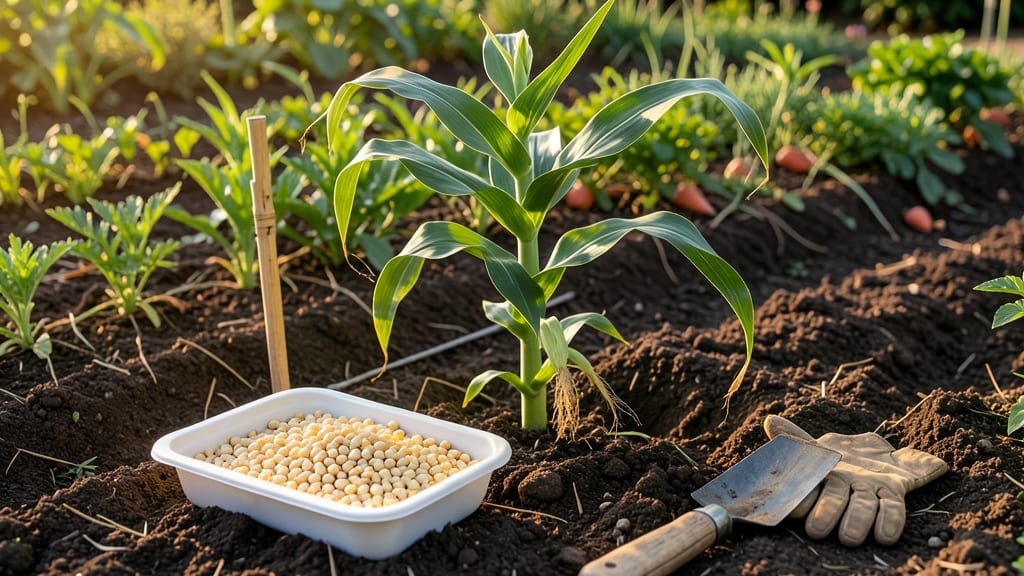
Timing your corn planting in Iowa isn't just about the calendar—it's about soil temperature, frost risk, and variety selection. Get it wrong, and you could end up with stunted plants or wasted seeds.
But when you nail the perfect window, you're looking at a bumper crop of sweet, plump 🌽 ears ready for harvest by late summer.
Most Iowa gardeners know the general rule: mid-April to mid-May is prime time, but that's just the starting point. The real secret lies in waiting for the soil to warm to 55-60°F—that's when those little seeds finally wake up and start growing.
Too early, and cold soil can delay germination for weeks, leaving your corn vulnerable to late frosts.
I've seen firsthand how a few extra degrees can make all the difference between a fast, healthy stand and a patchy, struggling field.
In this guide, I'll walk you through the science-backed timeline for planting corn in Iowa's 5a-5b zones, plus how to test your soil like a pro so you never miss the ideal moment again.
Whether you're a backyard gardener or a small-scale farmer, these tips will help you avoid common mistakes and maximize your yield. Let's get those seeds in the ground at the perfect time—because in Iowa, timing truly is everything.
Iowa corn planting dates by soil temperature: the science-backed timeline
Corn thrives when planted at the right soil temperature, which in Iowa typically means waiting for 45-50°F for germination and 55-60°F for optimal growth.
The last frost date in Iowa usually falls around April 15, but soil warming lags behind, creating a critical window between frost risk and ideal planting conditions.
Northern Iowa (USDA Zone 5a) has cooler soils, often delaying planting until mid-to-late May, while Southern Iowa (Zone 5b) can start as early as mid-April. This regional difference means gardeners must adjust planting dates based on local microclimates and 5-year frost averages.
Here’s how soil temperature dictates your planting schedule in Iowa:
| Soil Temperature (°F) | Iowa Region | Ideal Planting Window | Corn Variety Fit |
|---|---|---|---|
| 45-50°F | North Iowa (Zone 5a) | Late April to early May | Early-maturing (60-70 days) |
| 50-55°F | Central Iowa | Mid-April to mid-May | Medium-maturing (70-90 days) |
| 55-60°F | South Iowa (Zone 5b) | Early April to late April | Late-maturing (90-120 days) |
| 60°F+ | All Regions | Early June (backup) | Fast-growing (60-70 days) |
For Northern Iowa, where soils warm slowly, prioritize early-maturing varieties like 'Early Sunglow' (65 days) to avoid frost damage. In Southern Iowa, you can plant late varieties such as 'Pioneer Brand 34N13' (110 days) for larger yields, provided you monitor soil moisture during dry spells.
Iowa’s frost-free season averages 165 days, but late-spring weather can disrupt planting. Use a soil thermometer to confirm temperatures before seeding—corn seeds won’t germinate below 50°F, even if frost risk has passed. Pro tip: Plant 1-2 weeks after your local last frost date to account for soil lag.
If you’re in Zone 5a and soil stays below 50°F past May 1, consider black plastic mulch to warm the soil by 2-4°F and extend your planting window. This is especially useful for sweet corn varieties, which need consistent warmth to develop sugar content.
For backup planting, Southern Iowa can attempt a June planting with fast-maturing varieties like 'Golden Bantam' (70 days), but yields may be 20-30% lower due to shorter daylight. Northern gardeners should avoid June plantings unless using dwarf varieties in containers.
Always check 5-day forecasts before planting—cold snaps can kill young seedlings. In 2019, late-May frost in Northern Iowa wiped out early plantings, while 2020’s drought delayed Southern plantings by 3 weeks. Adaptability is key!
How to test soil temperature for corn planting in Iowa (DIY guide)
Testing soil temperature is the secret weapon for Iowa corn growers. Corn seeds need consistent warmth to germinate—45-50°F for sprouting, but 55-60°F for optimal growth. Without proper soil temps, your seeds might rot or take weeks to emerge.
I’ve learned the hard way: a 5-day delay in planting can mean smaller ears by harvest time.
Most gardeners skip this step, but Iowa’s unpredictable spring weather makes it non-negotiable. Whether you’re a backyard gardener or a small-scale farmer, knowing exactly when your soil is ready saves time, money, and frustration.
The best part? You don’t need fancy tools—just a few simple steps and a soil thermometer (or a DIY workaround).
Here’s my step-by-step method for testing soil temperature accurately, plus common mistakes that throw off your results. Trust me, skipping this step is how you end up with patchy, slow-growing corn.
🌱 Step-by-Step Soil Temperature Test
- ⏰ Choose the right time: Test soil temperature in the morning (between 9-11 AM) when temps are stable. Avoid midday heat spikes or evening cooldowns.
- 📏 Dig to the right depth: Corn seeds germinate 4 inches deep. Insert your thermometer horizontally at this depth for the most accurate reading.
- 🌡️ Use the right tool:
- Soil thermometer (best for precision, ~$15)
- DIY method: Bury a thermometer in a plastic bottle at 4 inches deep (leave it for 30 mins before reading).
- 📅 Monitor for 3-5 days: Soil temps fluctuate daily. Take readings for 3 consecutive days—if temps stay above 50°F, it’s safe to plant.
- 🌤️ Adjust for forecasts: If a cold snap is predicted, delay planting. Corn seeds won’t germinate below 50°F, even if the air feels warm.
Pro tip: Northern Iowa (USDA Zone 5a) often runs 5-7°F cooler than Southern Iowa (Zone 5b). If you’re in Dubuque or Waterloo, wait until May 1-15 for safer planting. Meanwhile, Des Moines or Cedar Rapids can start as early as mid-April if soil temps cooperate.
I once planted corn in early April because the air felt warm—only to watch my seeds rot in cold soil. The lesson? Soil temperature > air temperature every time. Use this method, and you’ll know exactly when to drop those seeds for fast, uniform germination.
Still unsure? Check local extension office data—Iowa State University’s Mesonet tracks soil temps by region. Combine their readings with your own tests for foolproof timing. Now grab that thermometer—your corn’s future depends on it! 🌽