
Plants
Timing your cantaloupe planting in Arizona can feel like a high-stakes game of chance—one wrong move, and your vines might fizzle before ever producing that sweet, juicy 🍈 you’re dreaming of.
But here’s the good news: with the right strategy, you can beat the desert’s heat and harvest faster than you think.
The key lies in understanding Arizona’s unique climate zones and soil temperatures. Unlike cooler regions, your cantaloupe seeds need warmth to germinate—we’re talking 70°F+ soil—which means waiting until late winter or early spring, when the ground finally cooperates.
This isn’t just about avoiding frost; it’s about giving your plants the fast start they need to outpace the summer heat.
In this guide, I’ll break down the exact planting windows for your area, whether you’re in Phoenix, Flagstaff, or the low desert.
You’ll learn how to time your sowing for maximum growth before the monsoons hit, plus pro tips for watering and soil prep that keep your cantaloupes thriving—no guesswork required.
Ready to turn your Arizona garden into a cantaloupe powerhouse? Let’s dive into the secrets of planting just right so you’re feasting on homegrown melons before the heat peaks.
Optimal Arizona cantaloupe planting windows by region (heat zones 9-11)
Arizona’s diverse microclimates mean Phoenix and Yuma enjoy longer growing seasons than Flagstaff or Prescott. Your planting window depends on soil temperature, nighttime lows, and heat zone. Aim for 70°F+ soil and consistent 60°F nights—any cooler, and seeds rot or vines struggle.
For low deserts (Phoenix, Tucson, Yuma), start seeds indoors 2-3 weeks before last frost (mid-February). Transplant outdoors by mid-March when nights stay above 65°F. High deserts (Flagstaff, Prescott) wait until late March to April to avoid spring frost.
Cantaloupes hate summer heat—plant too late, and fruits burn before ripening. Your last chance for a fall crop is late July in low deserts, but high deserts must finish by early July to mature before fall chill sets in.
Here’s how to align your planting with Arizona’s three key regions, including soil temp thresholds and frost-free deadlines:
| Region | Heat Zone | Soil Temp Threshold | Indoor Start (Seeds) | Outdoor Transplant | Last Chance (Fall) |
|---|---|---|---|---|---|
| Low Desert (Phoenix, Tucson, Yuma) | Zones 10-11 | 70°F+ | Mid-February | Mid-March | Late July |
| High Desert (Flagstaff, Prescott) | Zones 7-8 | 75°F+ | Late March | Late April | Early July |
| White Mountains (Show Low) | Zone 6 | 80°F+ | Early April | Mid-May | None (too short season) |
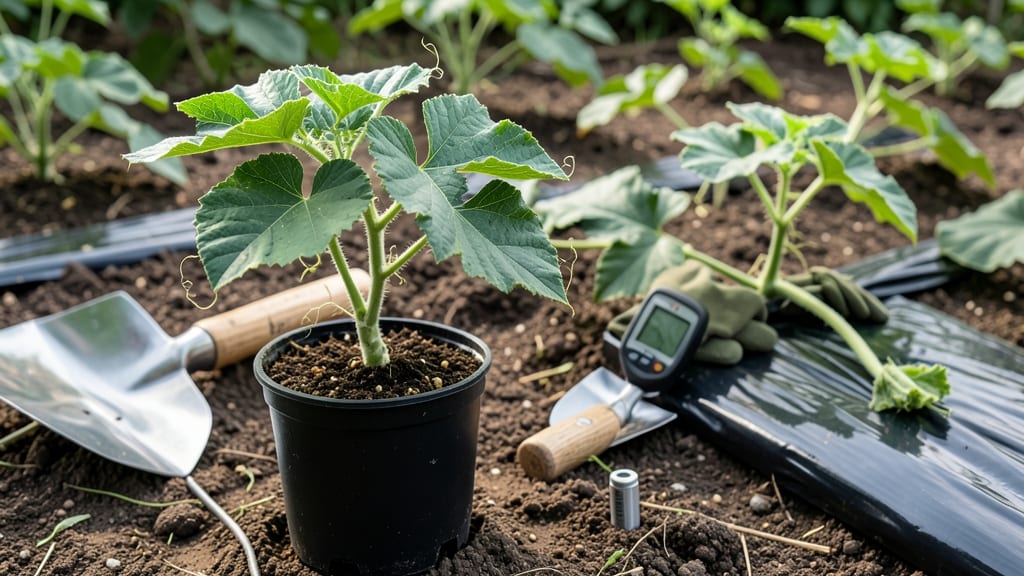
Use a soil thermometer to confirm readiness—cantaloupe seeds won’t germinate below 70°F. In low deserts, warm soil arrives by mid-February, but high deserts may wait until April. Pro tip: Black plastic mulch warms soil 5-10°F faster.
Direct-sow seeds after last frost, but transplants (from nurseries) give you a 2-week head start. Space vines 3-5 feet apart—they sprawl! In containers, use 5-gallon pots with trellis support to save space.
Watch for heat stress after 100°F days. Provide 30% shade cloth during peak afternoon sun to prevent blossom drop. Mornings under full sun are ideal—evening watering reduces fungal risk.
For high desert gardeners, focus on early-maturing varieties (e.g., ‘Sugar Bush’) to harvest before fall frost. In low deserts, prioritize late-summer planting for fall harvests before monsoon humidity peaks.
Timing is everything—plant too early, and frost zaps seedlings; plant too late, and heat roasts fruits. Master these windows, and you’ll enjoy homegrown cantaloupes from May through September!
How to extend Arizona’s cantaloupe season with succession planting
Arizona’s 100-degree summers can turn cantaloupe vines into crispy snacks if you don’t plan ahead. The secret? Succession planting—staggering your plantings to avoid heat burnout and maximize two harvests per year. This works especially well in low desert regions like Phoenix and Yuma, where summer heat arrives early.
Start your first batch in late February to early March when soil temperatures hit 70°F+. Then, every 2-3 weeks, sow another round until mid-May.
This ensures some vines mature before the peak heat of July and August, while others get a head start for a fall harvest if you’re in cooler high-desert areas.
For heat-sensitive varieties, use shade cloth (30-50%) during the hottest months. Install it by late May and remove it by mid-September to protect young plants from intense afternoon sun. This simple trick can add 2-3 extra weeks of viable growth before heat stress sets in.
Late February - Early March (soil temp 70°F+)
Until mid-May for summer harvest
30-50% coverage for heat protection
Late July - Early August for harvest
Basil deters pests; marigolds repel nematodes
Don’t overlook companion planting—it’s a game-changer in Arizona’s pest-heavy environment. Pair your cantaloupes with basil to repel whiteflies and marigolds to deter nematodes. These plants also improve flavor and yield by 15-20%, making your succession planting even more rewarding.
Watering becomes critical during succession planting. New seedlings need consistent moisture to establish roots, but mature vines can handle drier conditions. Use drip irrigation set to deliver 1-2 inches of water per week, focusing on the root zone to prevent fungal diseases like powdery mildew.
Timing your last planting is just as important as the first. In low desert areas, stop sowing by mid-May—any later, and your melons won’t mature before the monsoon rains and heat spikes.
In high desert regions, you can push it to early June for a fall harvest, but monitor weather forecasts closely.