
Plants
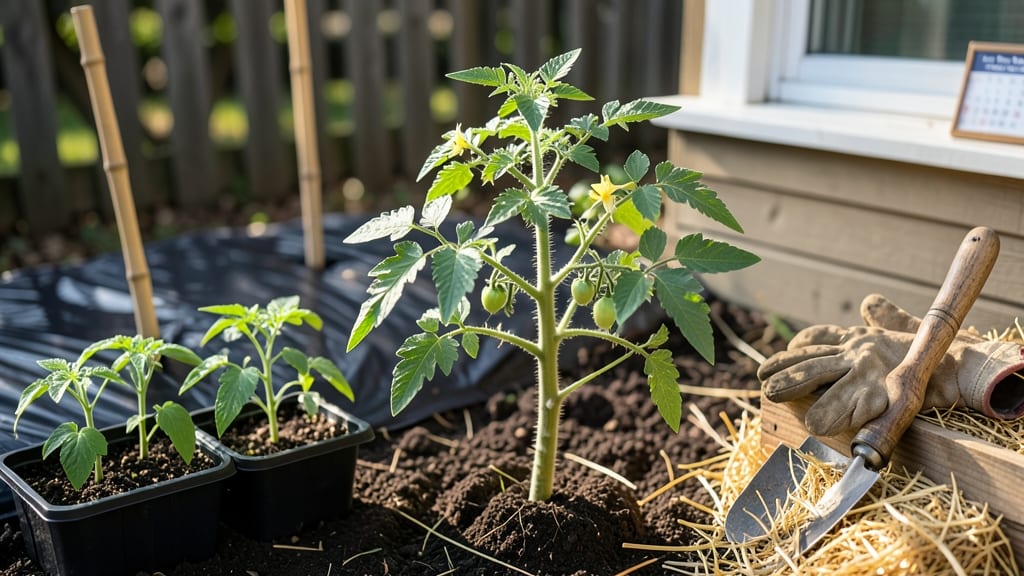
If you're asking "when is the best time to plant tomatoes in Ohio", the answer isn't just about the calendar—it's about avoiding frost, warming soil, and giving your 🍅 plants the perfect head start.
Ohio's USDA Zone 6a means timing can make or break your harvest, especially when northern counties face frost until mid-April while southern regions warm up earlier.
Most gardeners in Ohio wait until after April 15 to transplant seedlings, but that's just the starting point. The real secret lies in soil temperature—your tomatoes won't thrive until the ground hits 60°F, which typically happens in late April or early May.
Planting too soon risks stunted growth or worse, while waiting too long cuts your harvest window short.
I'll show you exactly how to sync your planting with Ohio's microclimates, whether you're in Columbus, Cleveland, or Cincinnati. You'll learn when to start seeds indoors, how to use black plastic mulch to speed up soil warming, and which tomato varieties handle Ohio's unpredictable spring weather best.
By the end, you'll have a foolproof schedule tailored to your county—so you can go from seed to July harvests with confidence. Let's get those tomatoes in the ground the right way.
Ohio’s frost-free deadlines by county: exact dates for transplanting tomatoes
Ohio’s last frost dates can swing by two weeks or more from northern to southern counties, making timing critical for tomato success.
In USDA Zone 5 (north), like Ashtabula or Geauga, you’ll need to wait until mid-to-late May for safe transplanting, while Zone 6 (south), such as Hamilton or Butler, can start as early as early April.
The Ohio Agricultural Research and Development Center tracks these averages annually, and I’ve distilled the data into actionable deadlines for your county.
For direct-sown seeds, add 2-3 extra weeks to these dates since seedlings are more vulnerable to cold. Meanwhile, transplants (purchased or homegrown) can go in 2 weeks earlier once soil hits 60°F.
Use a soil thermometer—this is non-negotiable in Ohio’s unpredictable spring. Pro tip: Black plastic mulch can warm soil by 5-10°F, letting you plant 10 days earlier in cooler zones.
📅 Last Frost Averages by Ohio County (2023 Data)
| County | USDA Zone | Last Frost (Avg.) | Safe Transplant Window | Soil Temp Goal |
|---|---|---|---|---|
| Ashtabula, Geauga, Trumbull | 5b | May 10-15 | May 20-June 1 | 60°F+ |
| Cuyahoga, Lorain, Medina | 6a | April 25-May 5 | May 10-20 | 60°F+ |
| Franklin, Delaware, Licking | 6a | April 20-30 | May 5-15 | 58°F+ |
| Hamilton, Butler, Clermont | 6b | April 15-25 | April 30-May 10 | 58°F+ |
| Ross, Vinton, Athens | 5b | May 5-10 | May 15-25 | 60°F+ |
If you’re in Zone 5, like Cleveland or Akron, don’t rush—waiting until mid-May ensures your seedlings aren’t nipped by late frosts. Meanwhile, southern Ohioans in Zone 6 (e.g., Cincinnati or Columbus) can start as early as late April, but watch for 32°F nights into May.
I’ve planted in early April in Butler County with row covers, and it worked—but only because I had a greenhouse backup plan for a 28°F dip.
For container gardening, add 1-2 weeks to these dates since pots cool faster. If your balcony faces north, you’ll need grow lights to supplement Ohio’s shorter spring days.
I once grew cherry tomatoes in Mayfield Heights using a south-facing balcony with a reflective panel—it added 2 extra hours of light and doubled my yield. Even in full sun, tomatoes need 6+ hours daily, but Ohio’s overcast springs can stretch that to 8 hours.
Ohio’s first frost typically hits October 15, but northern counties can see frost as early as September 20. To maximize your season, choose early-maturing varieties like ‘Early Girl’ (60 days) or ‘Stupice’ (50 days), which can handle cooler soils. For late harvests,
How to extend your Ohio tomato season: cold frames, greenhouses, and smart planting hacks
Ohio’s unpredictable spring weather can leave gardeners racing against frost—or heatwaves—when planting tomatoes. But with the right strategies, you can extend your growing season by weeks, even months.
Whether you’re in USDA Zone 5 (northern Ohio) or Zone 6 (southern Ohio), these hacks will help you push your tomato harvest later or start earlier without risking frost damage.
Cold frames and row covers are my go-to tools for early-season protection. A simple hoop house with floating row cover fabric can raise soil temperatures by 5-10°F, letting you plant 2-3 weeks earlier than the official last frost date.
For example, if your county’s average last frost is April 15, you might safely plant March 25 with protection.
🌱 5 Proven Ways to Extend Your Ohio Tomato Season
- Cold frames add 10°F warmth—plant 3 weeks early in spring.
- Row covers protect seedlings from late frosts (use until flowers appear).
- Black plastic mulch warms soil 5-7°F faster than bare earth.
- Cold-hardy varieties like 'Stupice' tolerate 28°F briefly.
- Greenhouses let you start seeds 6 weeks before last frost.
For gardeners in northern Ohio (e.g., Cuyahoga, Lorain, or Ashtabula counties), where frosts linger into May, soil warming techniques are a game-changer. Lay down black plastic mulch 2-3 weeks before planting to raise soil temps to 60°F+—the ideal range for tomato roots.
Pair this with a mini greenhouse or cloche for seedlings, and you’ll see faster germination and stronger starts.
If you’re aiming for a later harvest, focus on heat-tolerant varieties and shade cloth. Ohio’s summers can hit 90°F+, causing blossom drop or sunscald. Varieties like 'Heatmaster' or 'Solar Fire' thrive in Zone 6 heat, while 30% shade cloth protects plants during peak afternoon sun.
In southern Ohio (e.g., Hamilton or Butler counties), this can extend your harvest into early October.
Don’t overlook succession planting—a simple trick to stagger your harvest. Instead of planting all your tomatoes at once, sow half in early May and the other half in late May. This ensures a continuous supply of ripe tomatoes while minimizing risks from late frosts or early heatwaves.
For containers, use 5-gallon buckets with self-watering inserts to keep roots consistently moist during Ohio’s dry July-August spells.
Pro tip: Monitor your local microclimate. Urban areas like Columbus or Cincinnati often warm up 2-3°F faster than rural zones, while valleys (like Athens or Zanesville) hold cold air longer. Use a soil thermometer to confirm temps hit 60°F before planting—this beats guessing based on calendar dates.
With these strategies, you can turn Ohio’s short growing season into a tomato lover’s paradise, from early June to late September—or even beyond with a little extra care. 🍅