
Companion Plants
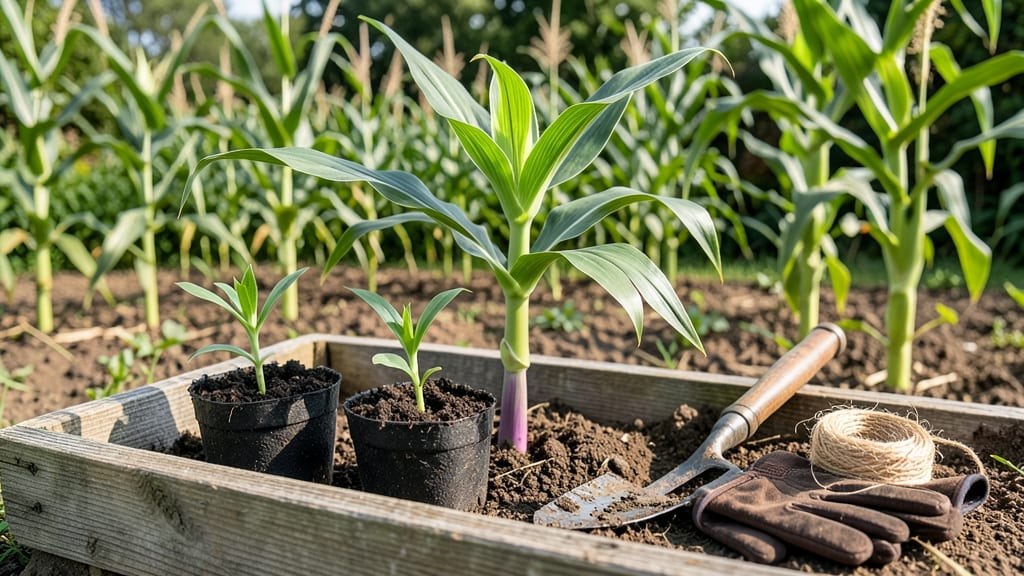
Timing your 🌽 corn planting in Pennsylvania wrong could mean the difference between golden ears of sweet corn and a sad, wilted disappointment. With USDA Zone 6a bringing unpredictable spring weather, knowing the exact window matters more than you might think.
Most gardeners in PA aim to plant between mid-April and early June, but soil temperature is the real game-changer. Corn needs warm soil—at least 60°F—to sprout properly, and waiting for that warmth can save you from stunted plants or late-season failures.
Whether you're in the cooler Pocono Mountains or the warmer Allegheny Valley, local microclimates shift planting dates by weeks. I'll break down how to read your soil, adjust for frost risks, and even use row covers to push your season earlier.
Ready to grow corn that thrives? Let's dive into the science behind PA's perfect planting windows and how to make every seed count.
Pennsylvania corn planting dates by soil temperature zones
Corn thrives when planted in warm soil—ideally between 50°F and 60°F. In Pennsylvania, this means waiting until late spring when frost risk has passed and ground temperatures stabilize.
The USDA Zone 6a classification covers most of PA, but microclimates create variations. For example, Philadelphia and Pittsburgh often warm faster than rural areas in the Pocono Mountains.
Your best bet is to plant corn after the last frost date, which typically falls between April 15 and May 1 across the state. However, soil warmth is more critical than air temperature.
Use a soil thermometer to confirm readiness—corn seeds won’t sprout until the soil reaches 60°F (15°C) consistently for at least a week.
Here’s how to align your planting with Pennsylvania’s regional soil warming patterns:
| Region | Last Frost Date | Ideal Planting Window | Soil Temp Goal |
|---|---|---|---|
| Southeastern PA (Philadelphia, Reading) | April 15–20 | Late April–mid-May | 60°F+ |
| Central PA (Harrisburg, Lancaster) | April 20–May 1 | Mid-April–early June | 55°F+ (wait for 60°F) |
| Northwest PA (Erie, Pittsburgh) | April 25–May 5 | Late April–mid-May | 60°F+ (lake-effect delays) |
| Northeastern PA (Poconos, Scranton) | May 1–10 | Early May–late May | 60°F+ (higher elevation) |
| Southwest PA (Allegheny River Valley) | April 10–15 | Late March–early April (risky!) | 55°F+ (use row covers) |
For urban gardeners in cities like Philadelphia or Pittsburgh, heat islands can create microclimates where soil warms 1–2 weeks earlier than rural areas. Test your soil with a thermometer for 3 consecutive days at a depth of 2 inches to confirm readiness.
If you’re in a high-altitude area like the Poconos, consider succession planting in late May or early June. Plant short-season varieties (e.g., ‘Ambrosia’ or ‘Silver Queen’) to maximize your harvest window before the first frost in mid-October.
Pro tip: Use black plastic mulch to warm soil faster. Lay it down 1–2 weeks before planting to raise soil temperatures by 5–10°F, accelerating germination. This is especially useful in cooler regions like northeastern PA.
For precise local data, check the Penn State Extension frost map or use the Almanac’s Frost/Freeze Calculator. These tools account for 30-year averages and help you avoid planting too early when late frosts can still occur.
Remember: Corn planted too early in cold soil risks rot and poor germination. Wait for consistent warmth—your patience will pay off with taller stalks and sweeter kernels.
Microclimate adjustments: how elevation and urban heat islands affect corn planting
Pennsylvania’s diverse geography means your corn’s planting window can shift dramatically depending on where you live. Mountain valleys like the Pocono Mountains often experience frost 2-3 weeks later than lowland areas near the Allegheny River Valley.
Meanwhile, cities like Philadelphia and Pittsburgh create "urban heat islands" that can push planting dates 10-14 days earlier than rural areas just miles away.
Lake-effect zones—especially near Lake Erie and Lake Delaware—also create microclimates where warmer air masses arrive earlier in spring. This can extend your planting window by 3-4 weeks in areas like Erie County compared to inland regions.
Here’s how elevation and urban heat islands shift your planting timeline:
| Microclimate Type | Adjustment to Planting Window | Example PA Regions |
|---|---|---|
| High Elevation (1,000+ ft) | Delay planting by 2-3 weeks | Pocono Mountains, Allegheny Plateau |
| Lowland Valleys | Plant 1-2 weeks earlier | Allegheny River Valley, Susquehanna River Basin |
| Urban Heat Islands | Plant 10-14 days earlier | Philadelphia, Pittsburgh, Harrisburg |
| Lake-Effect Zones | Extend window by 3-4 weeks | Erie County, Delaware Water Gap |
For high-altitude gardens, wait until soil reaches 60°F (15°C) and the last frost date has passed by at least 2 weeks. In urban areas, you can often plant late March to early April if you use black plastic mulch to warm the soil faster.
Use Penn State Extension’s frost maps to pinpoint your local last-frost date, then adjust for your microclimate. For example, Erie might see late April plantings succeed where Scranton needs to wait until mid-May.
Pro tip: If you’re in a transition zone (like Lebanon County between mountains and valleys), test soil temperature with a soil thermometer—corn won’t germinate well below 50°F (10°C), even if frost risk is low.