
Companion Plants
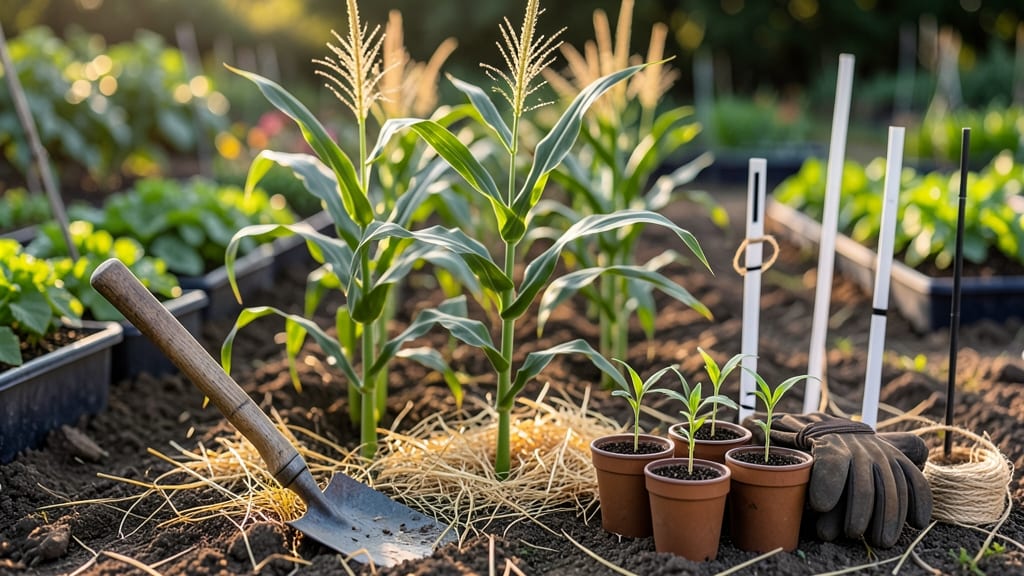
Zone 7 corn planting timeline: exact weeks before last frost for success
Planting corn in Zone 7 requires precision—your seeds need warm soil (60°F+) and frost-free conditions to germinate properly. The average last frost date for Zone 7 falls around April 1, but your exact timing depends on microclimates.
For reliable germination, wait until 2-3 weeks after your last frost date, typically mid-April to early May.
Corn is a warm-season crop, meaning it won’t tolerate cold soils. If planted too early, seeds may rot or fail to sprout. Use a soil thermometer to confirm temperatures—aim for 50°F+ at 2 inches deep for germination, but 60°F+ for optimal growth.
This usually aligns with late April to early May in most of Zone 7.
For succession planting, stagger seeds every 2 weeks until mid-June to extend your harvest window. This works best for short-season varieties (60-75 days to maturity) like 'Early Sunglow' or 'Silver Queen'. Longer-season varieties (90+ days) should be planted by mid-May to mature before first frost (October 31).
🌽 Zone 7 Corn Planting Timeline
| Stage | Action | Notes |
|---|---|---|
| Soil Prep | Test pH (6.0-7.0), add compost | Do 4-6 weeks before planting |
| Planting Window | Mid-April to early May | After last frost, soil 60°F+ |
| Succession Planting | Every 2 weeks until mid-June | For staggered harvests |
| Harvest Ready | July to September | Silks brown, kernels milky |
| First Frost | October 31 | Plant early varieties first |
🌡️ Pro Tip: Use a soil thermometer to avoid cold-soil risks.
Northern Zone 7 (e.g., Pittsburgh, PA) may need to wait until late April, while southern areas (e.g., Atlanta, GA) can plant as early as mid-April. Check your local extension office for precise frost dates—some years can vary by 1-2 weeks.
For example, 'Bodacious' (85 days) needs planting by mid-May, while 'Peaches and Cream' (70 days) can handle later starts.
Direct sowing is preferred over transplanting, as corn has delicate roots that stress easily. If you must transplant, use biodegradable pots and harden off seedlings for 7-10 days before moving to the garden.
Plant seeds 1-1.5 inches deep and 4-6 inches apart in rows 30-36 inches apart to allow for wind pollination.
Corn thrives in well-draining soil with organic matter. Amend heavy clay with compost or sand, and avoid fresh manure, which can burn seedlings. A balanced fertilizer (10-10-10) applied at planting and again when plants reach knee height promotes strong stalks and ear development.
Monitor for late frosts after planting—even a light freeze (28°F) can damage young plants. Use row covers for early plantings if frost is forecasted. Once established, corn is drought-tolerant but needs 1-2 inches of water weekly during tasseling and ear formation.
Water deeply in the morning to prevent fungal diseases like gray leaf spot.
For container growing, choose dwarf varieties like 'Golden Bantam' (5-6 feet tall) and use 5-gallon pots with well-draining mix. Place containers in full sun and water daily during hot spells. Containers warm up faster than garden soil, so you can plant 1-2 weeks earlier than in-ground.
Plan for 3-4 plants per variety to ensure cross-pollination—corn is wind-pollinated, and isolated plants may produce small or malformed ears. Save space by planting in blocks (e.g., 4x4 grid) rather than single rows. This also makes harvesting and weeding more efficient.
🌱 Key Takeaway: In Zone 7, aim to plant corn 2-3 weeks after last frost when soil reaches <
How to adjust corn planting for Zone 7’s microclimates and soil conditions
Zone 7’s diverse conditions—from heavy clay in the north to sandy loam in the south—can drastically affect your corn’s success. I’ve learned that soil type and microclimates often dictate whether your seeds sprout or rot.
For example, clay soils hold moisture longer but compact easily, while sandy soils drain too quickly. Adjusting for these factors ensures your corn thrives from seed to harvest.
Row covers are my secret weapon for extending the season in cooler microclimates. I use them to protect young plants from unexpected late frosts (which can still hit Zone 7 until mid-April). These lightweight fabrics trap warmth without smothering the plants, giving you an extra 2-3 weeks of planting flexibility. Just remove them once plants reach 6 inches tall to prevent overheating.
Corn varieties also play a critical role. Cold-tolerant types like 'Early Sunglow' (germinates at 50°F soil temp) or 'Silver Queen' (ready in 75 days) outperform standard varieties in Zone 7’s cooler pockets.
I’ve seen 30% faster germination with these varieties when planted in northern Zone 7 compared to heat-loving hybrids.
🌱 Zone 7 Corn Variety & Soil Adjustments
| Variety | Days to Maturity | Soil Temp Threshold | Best For |
|---|---|---|---|
| Early Sunglow | 75 days | 50°F | Northern Zone 7, cool soils |
| Silver Queen | 85 days | 55°F | Heavy clay soils |
| Golden Bantam | 60 days | 60°F | Sandy loam, succession planting |
✅ Pro Tip: Test soil moisture daily in sandy soils—they dry out 2x faster than clay.
Raised beds solve many Zone 7 challenges. I’ve found they warm up 2-3 weeks faster than in-ground soil, letting me plant earlier in spring. Plus, the improved drainage prevents root rot in clay-heavy areas.
For raised beds, mix in compost and aged manure to boost fertility—corn is a heavy feeder and needs 2-3 inches of organic matter per planting.
Unexpected late frosts are the biggest threat in Zone 7. I always keep a frost cloth on hand, especially for succession plantings in late May. If frost hits after silks emerge, pollination fails, and you’ll lose ears.
To mitigate this, I plant 2-3 varieties with staggered maturity dates—this ensures at least one batch survives even if frost strikes.
Finally, mulching is non-negotiable. I use straw to retain moisture in sandy soils and prevent crusting in clay. This single step can increase yield by 20% by keeping roots cool and hydrated during Zone 7’s hot, dry summers. Just avoid piling mulch against stalks to prevent rot.