
Plants
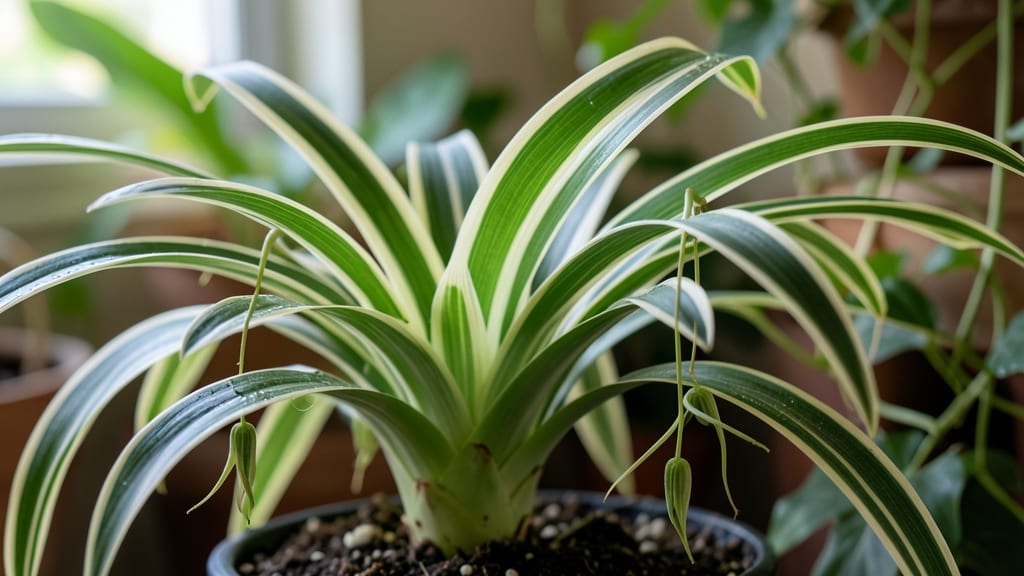
Spider plant light requirements: the perfect balance for optimal growth
If you’ve ever wondered why your spider plant (Chlorophytum comosum) looks lackluster or stops producing those adorable spiderettes, light is likely the culprit. This hardy houseplant thrives in bright indirect light, but it’s surprisingly adaptable—even to lower light conditions.
The key is understanding how much light your spider plant truly needs to flourish, not just survive.
For optimal growth, aim for 4-6 hours of bright indirect sunlight daily. This mimics its natural habitat under the dappled light of a forest canopy. Too little light, and your plant may stretch toward the nearest window, growing leggy and sparse.
Too much direct sun, and those beautiful variegated leaves can scorch, turning a nasty yellow or brown. Let’s break down the ideal light conditions and how to spot when your plant is begging for adjustment.
Spider Plant Light Requirements Summary
| Light Condition | Ideal Placement | Effects on Plant |
|---|---|---|
| Bright Indirect Light | East or North-facing window, 1-3 feet away | Vibrant green/variegated leaves, frequent spiderettes |
| Low Light (Tolerated) | Corner of a room, away from windows | Slower growth, fewer spiderettes, leggy stems |
| Direct Sunlight | South/West window without filter | Brown/yellow leaf tips, crispy edges, weak growth |
| Artificial Grow Lights | 12-16 inches under LED grow lights | Healthy growth, even in dark rooms (6-8 hours/day) |
💡 Pro Tip: Rotate your spider plant every 2-4 weeks to ensure even light exposure and prevent lopsided growth.
One of the most fascinating aspects of spider plants is how they adapt their leaf color based on light exposure. In bright indirect light, you’ll see the classic striped variegation—white or yellow edges on green leaves—while lower light conditions often result in solid green leaves.
This isn’t a sign of poor health; it’s simply the plant adjusting to its environment. However, if the variegation fades completely, it’s a clue that your plant is craving more light.
The production of spiderettes (those adorable baby plants) is another telltale sign of proper light exposure. When your spider plant is happy with its light, it rewards you with long, sturdy stems topped with 2-4 inch spiderettes.
If you’re not seeing these, it might be time to move your plant closer to a brighter spot—or invest in a grow light if natural light is limited.
Seasonal changes also play a role in your spider plant’s light needs. During winter months, when daylight hours are shorter, you might notice your plant becoming leggy or sparse. This is a natural response to lower light availability.
To combat this, consider supplementing with a 12-16 hour grow light or relocating your plant to a sunnier spot in your home, like a sunroom or kitchen with an east-facing window.
If you’re unsure whether your current spot is ideal, observe your spider plant’s growth patterns for a few weeks. Healthy leaves should be upright, firm, and vibrant, with no signs of browning or wilting.
The undersides of the leaves should also be free of dust, as dust buildup can block light absorption. A quick wipe with a damp cloth every few weeks can make a surprising difference in your plant’s ability to thrive.
For those living in apartments or homes with limited natural light, grow lights are a game-changer. LED grow lights designed for houseplants are energy-efficient and can provide the full-spectrum light your spider plant needs to stay happy year-round.
Position the light 12-16 inches above your plant and keep it on for 6-8 hours daily to mimic natural daylight cycles.
Remember, spider plants are incredibly forgiving, but they do have preferences. By providing the right balance of bright indirect light, you’ll be rewarded with a lush, vibrant plant that produces spiderettes year after year.
And if you ever find yourself in doubt, just ask yourself: Are my spider plant’s leaves happy? The answer will be in the color, shape, and growth pattern.
Spider plant light requirements: the perfect balance for optimal growth
Your spider plant (Chlorophytum comosum) thrives best with bright indirect light, but it’s surprisingly adaptable. Unlike sun-loving plants, it avoids harsh rays that scorch leaves. Think of it as the perfect office companion—happy near windows but not basking in direct sunlight.
This adaptability makes it ideal for low-light spaces, though growth may slow without enough brightness.
The secret to vibrant variegated leaves and prolific spiderette production lies in 4-6 hours of indirect light daily. Too little light leads to pale, stretched leaves, while too much causes brown leaf tips. Finding that sweet spot ensures your plant stays lush and productive year-round.
| Light Condition | Ideal Characteristics | Effects on Plant |
|---|---|---|
| Bright Indirect Light | East/west-facing windows, 1-3 ft away | Vibrant variegation, compact growth, frequent spiderettes |
| Low Light | North-facing windows, 3+ ft away | Slower growth, pale leaves, fewer spiderettes |
| Direct Sunlight | South-facing windows without filter | Brown leaf tips, crispy edges, weakened stems |
Seasonal adjustments are key—winter light is weaker, so move your plant closer to windows or supplement with a grow light. In summer, watch for harsh afternoon sun and use sheer curtains to diffuse light. A simple trick: rotate your plant quarter-turn weekly to ensure even growth.
For variegated varieties like 'Vittatum', aim for slightly brighter conditions to maintain their striking patterns. These cultivars need 10-12% more light than solid-green types. Test your setup by observing leaf color—deep green means it’s thriving, while yellow-green signals a need for more brightness.
Pro tip: Place your spider plant where you’d expect to see morning sunlight fading by midday. This mimics its natural habitat under dappled forest light. With the right balance, you’ll reward yourself with year-round spiderettes and a plant that’s the envy of every plant lover.
Remember, consistency matters. Sudden light changes can shock your plant, so adjust gradually. A happy spider plant isn’t just surviving—it’s thriving and multiplying, ready to share its babies with friends. 🌱