
Plants
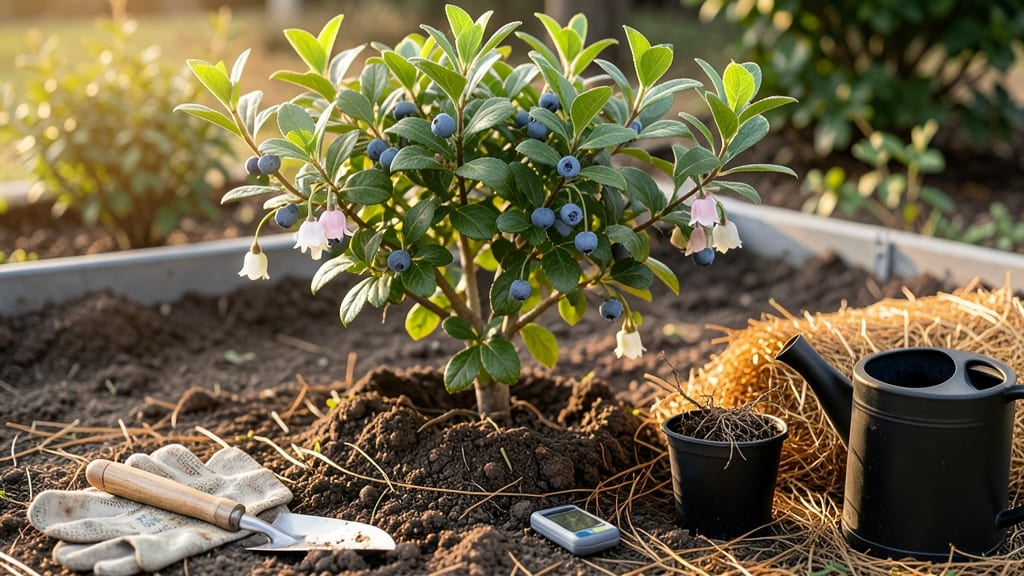
Best months to plant blueberry bushes in Georgia’s Zone 7-8 (with chill-hour requirements)
Georgia’s USDA Zones 7b-8a offer perfect conditions for blueberries, but chill-hour requirements (500–1,000 hours below 45°F) dictate the best planting window. Most Georgia varieties thrive with 600–900 chill hours, so timing matters.
Plant too early, and your bushes won’t get enough winter dormancy; too late, and summer heat will stress young roots.
For Georgia gardeners, the ideal planting window is late winter to early spring—specifically February through March. This aligns with soil warming and avoids extreme summer heat.
Bare-root bushes planted in this window establish roots before the growing season peaks, while container-grown bushes can also go in until April.
Northern Georgia (Zone 7b) has slightly cooler winters, so February planting is ideal. Southern Georgia (Zone 8a) benefits from March planting to escape early heat waves. Always check your local last frost date (typically March 15 in most regions) to avoid frost damage to tender new growth.
Here’s a quick reference for Georgia’s blueberry planting calendar:
| Month | Bare-Root Planting | Container-Grown Planting | Chill Hours Needed |
|---|---|---|---|
| February | ✅ Best for Zone 7b | ⚠️ Risk of late frost | 600–900 hours |
| March | ✅ Ideal for all zones | ✅ Safe for Zone 8a | 500–800 hours |
| April | ❌ Too late for bare-root | ✅ Last chance for containers | 400–600 hours |
| Fall (Oct–Nov) | ❌ Avoid—insufficient root growth | ❌ Not recommended | N/A |
Georgia’s native varieties like ‘Tifblue’ and ‘Premier’ are bred for 500–900 chill hours, making them perfect for the state. Southern varieties (e.g., ‘Southern Highbush’) need fewer chill hours (300–500), while northern types (e.g., ‘Duke’) require 800–1,000 hours.
Always check the tag for chill-hour requirements before buying.
If you miss the February–March window, container-grown bushes can still go in through April, but prioritize morning sun and deep watering to help roots establish. Avoid planting in summer or fall—Georgia’s heat and humidity stress young plants, and fall planting leaves them vulnerable to winter dieback.
Pro tip: Soil temperature should be at least 40°F for planting. Test with a soil thermometer or wait until daytime highs consistently reach 55°F. In Georgia, this usually aligns with late February to early March in most regions.
Once planted, mulch heavily with pine straw or wood chips to retain moisture and regulate soil temperature. This is especially critical in Georgia’s Zone 8a, where summer heat can dry out soil quickly. Mulch also suppresses weeds, reducing competition for nutrients.
For first-year care, focus on watering deeply 1–2 times per week and avoiding fertilizer until spring of the second year. Over-fertilizing young bushes encourages leafy growth over fruit production, which you’ll want to delay until the plant is established.
Remember: Patience is key—blueberry bushes take 2–3 years to bear fruit after planting. But with the right timing, your Georgia-grown bushes will reward you with juicy, homegrown blueberries for decades. 🫐
How to adjust planting time based on Georgia’s microclimates (North vs. South regions)
Georgia’s climate varies dramatically from North to South, meaning what works in Zone 7a Atlanta might fail in Zone 8a Savannah. North Georgia’s cooler nights and earlier frosts create a longer chill-hour window (500–800 hours), while South Georgia’s warmer winters require varieties with fewer chill hours (300–600).
Let’s break down the key differences and how to adapt your planting schedule.
In North Georgia (Zone 7a), aim to plant bare-root blueberries in February—just as the ground thaws but before bud break. This gives roots time to establish before summer’s heat peaks.
For South Georgia (Zone 8a), delay until mid-March to avoid early-season heat stress, which can stunt root growth. Always check your local frost dates—North Georgia’s last frost is typically March 15, while South Georgia’s can linger until March 30.
| Region | Zone | Best Planting Window | Chill-Hour Needs | Soil Prep Tip |
|---|---|---|---|---|
| North Georgia (Atlanta, Dahlonega) | 7a | Late February (after last frost) | 500–800 hours | Mix peat moss into clay soil |
| South Georgia (Savannah, Macon) | 8a | Mid-March (avoid heat stress) | 300–600 hours | Add sulfur to lower pH |
| Mountain Regions (Blue Ridge) | 6b-7a | January–February (earlier frost risk) | 800–1,000 hours | Use compost for drainage |
For North Georgia gardeners, prioritize cold-hardy varieties like ‘Tifblue’ or ‘Climax’, which thrive with 700+ chill hours. In South Georgia, opt for low-chill varieties such as ‘Premier’ or ‘Peach Sorbet’, which need only 350–500 chill hours.
Always check the USDA Plant Hardiness Zone Map for your exact location—even a 5-mile elevation change can shift your microclimate by a full zone.
Another critical factor is soil acidity. Georgia’s native clay is often too alkaline for blueberries, which need a pH of 4.5–5.5. Test your soil 6 weeks before planting and amend with elemental sulfur or pine fines if needed.
In North Georgia’s wetter soils, focus on drainage; in South Georgia’s drier areas, mulch heavily to retain moisture during summer droughts.
Pro tip: If you’re in a transition zone (e.g., Middle Georgia), split the difference—plant in early March and use black plastic mulch to warm the soil faster.
This helps young roots establish before the July heatwave hits. Always water deeply after planting to encourage root spread into the amended soil.
Finally, monitor your bushes for transplant shock in the first 30 days. Yellowing leaves or wilting can signal overwatering or poor drainage, while slow growth may mean insufficient chill hours.
Adjust your care routine based on your region’s unique conditions—North Georgia’s cooler summers allow for earlier harvests, while South Georgia’s heat may delay fruiting until late June.