
Plants
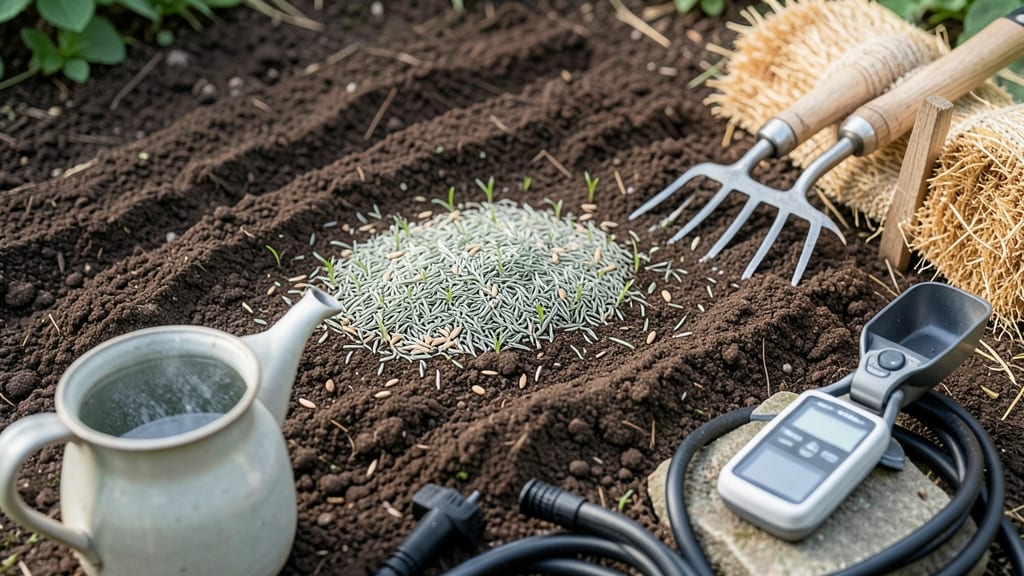
Planting your grass seed in spring at the wrong time can mean the difference between a vibrant lawn and a frustrating patchwork of failure.
The key isn’t just picking a date—it’s understanding the 4-week pre-frost window that gives your 🌱 grass the best chance to establish roots before summer heat or winter chill strikes.
In USDA Zone 6, like many northern regions, the ideal planting window typically opens in early April—just as the soil warms and the threat of late frosts recedes. But timing isn’t one-size-fits-all; cooler climates need to act faster, while southern areas can stretch their window later into the season.
Why does this matter? Because seeding too early risks frost damage, while waiting too long leaves your lawn vulnerable to drought or weeds. I’ll break down exactly when to plant based on your region, plus the soil and weather conditions that set you up for success.
Let’s dive into the exact steps to ensure your spring planting leads to a lush, green lawn—without the guesswork. You’ll learn how to read your soil, adjust for local microclimates, and even salvage a late start with smart strategies.
The 4-Week pre-frost rule: exact spring planting window by US region
Spring grass seeding success hinges on one golden rule: plant 4 weeks before your region's first frost. This window gives seeds time to germinate, develop roots, and establish before winter chill sets in.
But timing varies dramatically across the U.S.—what works in Zone 3 Minnesota will scorch Zone 9 Florida grass. Let's break down the exact planting windows by region, including soil temperature thresholds and grass types that thrive in each zone.
For northern climates (Zones 3-5), your planting window closes by mid-July. That's because average first frosts arrive in mid-October, leaving just 12 weeks for grass to establish. In the Mid-Atlantic (Zones 6-7), you've got until early September, while southern gardeners (Zones 8-10) can extend seeding until early October.
Each region also has specific soil temperature requirements—cool-season grasses need 50-60°F soils, while warm-season varieties prefer 65-75°F.
To pinpoint your exact planting window, check your local frost dates using the USDA Plant Hardiness Zone Map or your state's agricultural extension service.
Pro tip: Aim for soil temperatures between 50-75°F—cool-season grasses like Kentucky bluegrass germinate best at 50-60°F, while warm-season grasses such as Bermuda thrive at 65-75°F. Use a soil thermometer to verify before planting.
Missed the window? Don't panic. Overseeding in late spring can still work if you choose fast-germinating varieties like perennial ryegrass, which sprouts in 7-10 days. Just be prepared to protect seedlings with frost cloth if late frosts threaten.
For southern gardeners, late spring planting risks heat stress, so focus on shade-tolerant varieties like Zoysia if your lawn gets afternoon sun.
Regional differences also dictate grass seed selection. Northern gardeners should stick with cool-season grasses that handle winter dormancy, while southern lawns thrive with warm-season varieties that go dormant in summer heat.
Even within regions, microclimates matter—south-facing slopes warm up faster than shaded areas, potentially extending your planting window by 1-2 weeks.
For precise timing, combine frost dates with moisture forecasts. Grass seeds need consistent soil moisture to germinate—plant during a 7-day stretch with no rain in the forecast, or be ready to water daily.
Use a weather app with soil moisture alerts to track conditions in real time. Remember: too early risks frost damage, while too late means summer heat will stress young seedlings before they establish.
Here's how to calculate your exact planting window: Subtract 4 weeks from your first frost date, then verify soil temperatures. For example, if your frost date is October 15, plant by September 15.
But if your soil stays below 50°F until late May, wait until then—seed won't germinate in cold soil, no matter how early you plant.
Use this rule to avoid common mistakes like planting Kentucky bluegrass in August (it'll bake in summer heat) or Bermuda in April (it'll freeze before establishing).
Once you've nailed the timing, focus on soil preparation. Loosen the top 2-3 inches of soil, remove debris, and level the area—grass seeds need good soil contact to germinate. For large lawns, rent a core aerator to improve water and nutrient penetration.
After planting, keep soil consistently moist (about 1 inch of water per week) until germination completes. This attention to detail makes all the difference between a patchy lawn and a uniform, lush carpet of grass.
🌱
Critical soil and weather conditions for spring grass seed success
Spring grass seed success hinges on more than just timing—your soil temperature, moisture levels, and weather forecasts must align perfectly. Cool-season grasses like Kentucky Bluegrass thrive when soil temps hover between 50-60°F, while warm-season varieties need 65-75°F to germinate reliably.
Skipping this step often leads to slow germination or complete failure, especially if you plant too early when late frosts lurk around the corner.
Before you even reach for your seed packet, test your soil pH—aim for a neutral range of 6.0-7.5. Most garden centers sell affordable test kits, or you can send a sample to your local Cooperative Extension Service.
If your soil is too acidic or alkaline, amend it with lime (for acidity) or sulfur (for alkalinity) at least 4-6 weeks before planting. This gives the amendments time to integrate fully into the soil structure.
Now, let’s talk moisture management. Grass seed needs consistent moisture to germinate, but soggy soil suffocates roots. The golden rule is to keep the top 1-2 inches of soil evenly moist—never waterlogged.
Use a rain gauge or tuna can to measure 0.25 inches of water per session, applied in the early morning to prevent fungal diseases. If your lawn feels dry by midday, it’s time to water again.
Soil Temperature Check
Use a soil thermometer—plant when temps stay above 50°F (cool-season) or 65°F (warm-season) for 5+ days. Morning is best for accuracy.
Moisture Balance Test
Grab a handful of soil: if it crumbles but doesn’t fall apart, it’s ready. Too dry? Water deeply 24 hours before planting to avoid surface evaporation.
Frost Forecast Buffer
Check the 10-day forecast—if nighttime temps dip below 32°F, delay planting until conditions stabilize. A frost warning can turn your fresh seed into an icy snack overnight.
One of the biggest mistakes I see is planting too late in spring when summer heat is already setting in. If your region’s average first frost arrives in mid-October, aim to finish planting by early September to give your grass 6-8 weeks of growth before winter dormancy.
For warm-season grasses like Zoysia or Bermuda, late spring planting (after May 15) is risky—these varieties prefer to establish in late spring to early summer when soil is warm.
Pro tip: If you’re unsure about your local frost dates, bookmark the National Weather Service’s frost prediction maps or use apps like Old Farmer’s Almanac for regional insights. Pair this with a soil thermometer (available for $10-$15), and you’ll have a data-driven edge over guesswork.
Remember, consistency is key—whether it’s soil moisture, temperature, or sunlight, small daily efforts compound into a thick, resilient lawn by summer.
Finally, don’t overlook weed control before planting. Apply a pre-emergent herbicide like corn gluten meal 2-3 weeks before seeding to block weeds without harming your grass. This step alone can save you hours of hand-pulling later in the season.