
How To
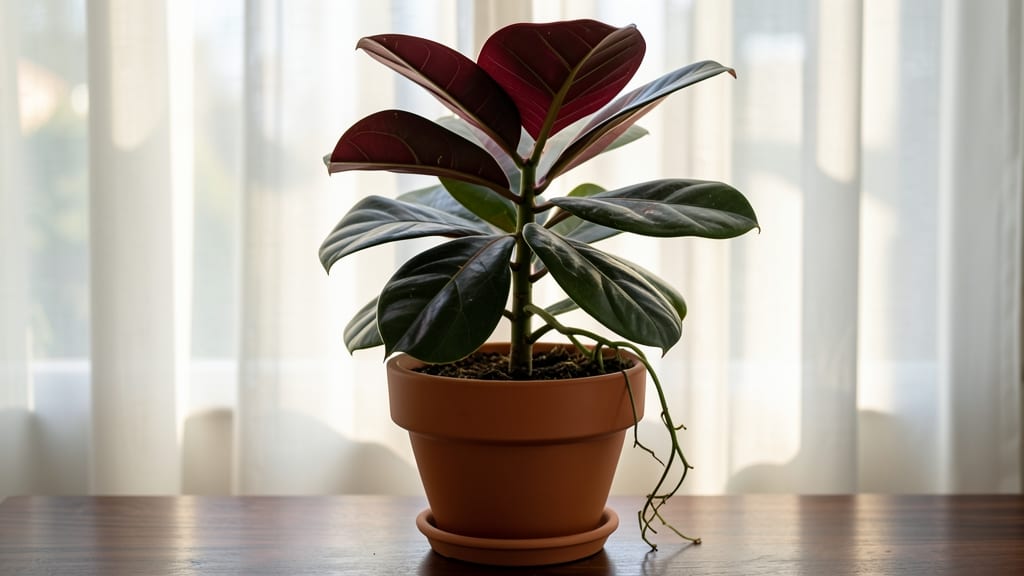
If your rubber plant 🌿 leaves are looking dull or stretched out, you’re probably missing the mark on light—because this plant isn’t just picky, it’s particular about how much sunlight it gets. Too little, and it grows leggy; too much, and those glossy leaves turn crispy at the edges.
Getting the balance right is easier than you think, and I’ll show you exactly how to nail it for a thriving plant year-round.
Most people assume rubber plants need direct sunlight, but that’s where they go wrong. The ideal light for a rubber plant is bright but filtered—think morning sun or a spot near an east-facing window.
We’re talking 2 to 4 hours of indirect light daily, depending on the season. That’s the sweet spot for keeping those bold leaves vibrant and your plant growing strong, not stressed.
Here’s the kicker: your rubber plant’s light needs change with the seasons. In winter, it might need a little extra help from a grow light, while summer’s harsh rays could burn those delicate leaves if you’re not careful.
I’ll walk you through how to spot the signs of over- or under-lighting and adjust your setup so your plant stays happy, no matter what’s happening outside.
Ready to transform that struggling rubber plant 🌿 into a showstopper? Let’s dive into the exact light conditions your plant craves, plus some easy fixes for common mistakes that even experienced plant parents make.
Ideal light requirements for rubber plants: hours and intensity
Your rubber plant (Ficus elastica) thrives on bright indirect light, but the exact hours depend on its growth stage. Young plants need 4-6 hours daily of filtered sunlight to develop sturdy stems, while mature plants tolerate 2-4 hours per day once established.
Direct sun can scorch leaves, so avoid placing it near south-facing windows without protection.
The variegated varieties (like 'Tineke' or 'White Princess') require even more light—6+ hours daily—to maintain their striking patterns. Solid-leaf types (e.g., 'Black Prince') adapt better to lower light conditions, making them ideal for offices or dimly lit rooms. Always rotate your plant weekly to ensure even growth.
Here’s how to translate light intensity into real-world placement: A spot 3-5 feet from an east-facing window provides perfect morning light, while west-facing windows need sheer curtains to diffuse afternoon sun. North-facing windows work year-round but may slow growth during winter’s shorter days.
| Plant Stage | Light Type | Daily Hours | Window Placement |
|---|---|---|---|
| Young Plants (<1 year) | Bright indirect | 4-6 hours | East window, 2-3 ft away |
| Mature Plants (1+ years) | Bright indirect | 2-4 hours | North or east window |
| Variegated Varieties | Medium to bright indirect | 6+ hours | West window with sheer curtain |
| Low-Light Tolerance | Low to medium indirect | 1-2 hours | North corner, 5+ ft from window |
Seasonal adjustments are key: In summer, your rubber plant may need shorter daily exposure (2-3 hours) to avoid leaf burn, while winter’s weaker sunlight (8-10 hours total) requires moving plants closer to windows. Use a light meter app to check intensity—ideal levels are 1,000-2,000 foot-candles.
Pro tip: If your plant starts leaning toward the light, it’s a sign of insufficient exposure. Rotate it quarter-turns weekly to encourage balanced growth. For variegated types, insufficient light fades their patterns, so prioritize their placement near the brightest spots in your home.
Outdoor rubber plants in USDA Zone 6+ can handle partial shade (30-50% sunlight) during summer months, but bring them indoors before temperatures drop below 50°F. Their glossy leaves act like solar panels—maximize their efficiency by keeping them dust-free with a microfiber cloth monthly.
Remember: No light is better than harsh direct sun. Even a few hours of afternoon sun can cause brown patches on leaves. If your home lacks natural light, grow lights (12-14 hours daily) become essential for maintaining that signature leathery, deep green foliage.
For office spaces, place your rubber plant within 3 feet of a window to ensure it gets enough light without overheating. Fluorescent lights can supplement, but they’re no match for natural sunlight—so always prioritize windows when possible.
🌿
Ideal light requirements for rubber plants: hours and intensity
Rubber plants (Ficus elastica) thrive in bright indirect light, but their exact needs depend on the variety and growth stage. While they tolerate low-light conditions, this often results in leggy growth and smaller leaves.
Aim for 4-6 hours of bright, filtered light daily for optimal health and those signature glossy leaves you love.
For solid-leaf varieties (like 'Black Prince'), 4-5 hours of morning sun with afternoon shade works perfectly. Variegated types (such as 'White Swirl') need slightly more light—5-6 hours—to maintain their striking patterns.
Too little light causes pale, weak growth, while direct afternoon sun can scorch leaves, leaving brown patches.
| Plant Type | Light Needs | Daily Hours | Best Window |
|---|---|---|---|
| Solid-Leaf (e.g., 'Black Prince') | Bright Indirect | 4-5 hours | East or North |
| Variegated (e.g., 'White Swirl') | Bright to Medium Indirect | 5-6 hours | South (filtered) |
| Low-Light Tolerant (e.g., 'Robusta') | Low to Medium Indirect | 2-4 hours | North or West |
Seasonal adjustments are key! In summer, move your rubber plant 3-4 feet from a south-facing window to avoid leaf burn. During winter, when natural light drops, supplement with a grow light for 4-5 hours daily to prevent stunted growth.
Rotate your plant quarter-turns weekly to ensure even light exposure and prevent lopsided growth.
Pro tip: Test your plant’s light by placing your hand near the leaves. If you can’t feel warmth, the light is too dim. If your skin feels hot, the light is too intense. Adjust placement accordingly to strike the perfect balance for vibrant, healthy foliage.
For outdoor rubber plants in USDA Zone 6, acclimate them gradually to direct sun during spring and fall. Start with 1-2 hours of morning sun, then increase by 1 hour weekly to avoid sun shock. Even outdoor plants need afternoon shade to prevent leaf scorch.
Remember, rubber plants are forgiving—they’ll survive in low light but won’t reach their full potential. Investing in the right light conditions now means faster growth, brighter leaves, and a plant that stays compact and bushy for years to come. 🌿