
Plants
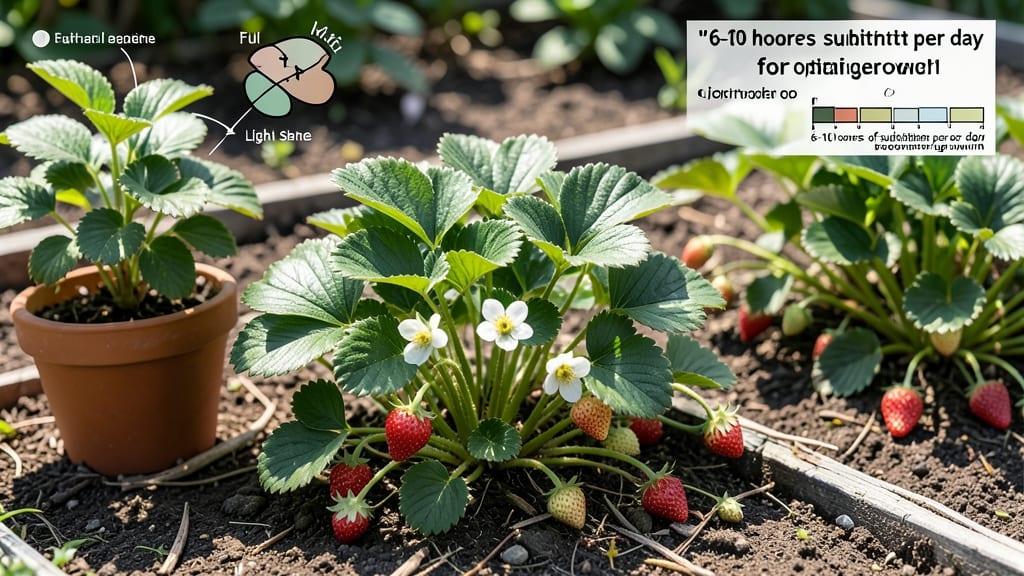
Optimal sunlight requirements for strawberry plants: daily hours and seasonal adjustments
Strawberries are sun-worshippers, but like most plants, they need the right balance—not too much, not too little. Ideally, they thrive with 6 to 10 hours of direct sunlight daily.
This range ensures strong growth, abundant flowering, and sweet, flavorful berries. Without enough light, your plants will struggle to produce fruit, while excessive sun can lead to scorched leaves and reduced yields.
During the vegetative stage (early growth), strawberries need about 6 hours of sunlight to establish a healthy root system. Once they start flowering and fruiting, they demand 8 to 10 hours of full sun to maximize berry production.
In hot climates, like the Southwest U.S., providing afternoon shade can prevent heat stress while still meeting their light needs.
Seasonal adjustments are key. In spring and fall, when days are shorter, supplement natural light with reflective surfaces like white walls or mulch to bounce extra light onto your plants. During summer’s peak heat, ensure your strawberries receive morning sun and afternoon shade to avoid wilting or sunburn.
Light intensity matters too. Strawberries prefer bright, direct sunlight, not the diffused light of deep shade. If you’re growing in containers on a patio, rotate them daily to ensure even light exposure.
In shady microclimates, like under trees, opt for shade-tolerant varieties like 'Albion' or 'Seascape' to improve your chances of success.
| Growth Stage | Sunlight Needs | Seasonal Adjustments | Impact of Improper Light |
|---|---|---|---|
| Vegetative (Early Growth) | 6 hours of direct sun | Spring/Fall: Use reflective mulch | Weak stems, yellow leaves |
| Flowering | 8 hours of direct sun | Summer: Provide afternoon shade | Fewer flowers, poor fruit set |
| Fruiting | 8-10 hours of direct sun | Hot climates: Drip irrigation + shade cloth | Small, bland berries, leaf scorch |
| Dormancy (Winter) | 4-6 hours of sun | Mulch to retain light and warmth | Weak regrowth in spring |
For container-grown strawberries, place pots in the sunniest spot available, even if it’s only a few hours. South-facing windowsills or balconies work well, but rotate containers weekly to prevent lopsided growth.
If you notice stretched, leggy plants, they’re begging for more light—consider moving them outdoors or supplementing with a grow light.
In USDA Zones 5-7, where winters are colder, strawberries often enter dormancy. During this time, they only need 4 to 6 hours of sunlight to survive.
However, everbearing varieties, like 'Ozark Beauty,' can produce fruit in both spring and fall, so they still need 6+ hours of sun during active growth periods.
One common mistake is assuming partial shade means "any shade." Strawberries in deep shade (less than 4 hours of sun) will produce tiny, tasteless berries or none at all.
If your yard is shady, choose shade-tolerant varieties and pair them with reflective materials to trick them into thinking they’re getting more light.
Pro tip: Use a light meter or observe your plants’ shadows. If shadows are short and crisp at midday, your strawberries are likely getting enough light.
If shadows are long or fuzzy, it’s time to relocate or supplement their sunlight. Remember, consistency is key—strawberries hate sudden changes in light exposure.
🌱
Optimal sunlight requirements for strawberry plants: daily hours and seasonal adjustments
Strawberries are sun-worshippers, craving 6-10 hours of direct sunlight daily for peak performance. During the vegetative stage (early growth), they need at least 6 hours to develop strong roots and foliage. When flowering and fruiting, 8-10 hours of sunlight ensures abundant, flavorful berries.
In hot climates (Zones 8-10), afternoon shade helps prevent leaf scorch while maintaining fruit production. Morning sun with afternoon shade is ideal—think 6-8 hours of direct light in these regions. Northern climates (Zones 3-6) can handle full sun exposure year-round, as cooler temps reduce scorching risks.
Seasonal adjustments matter most. Spring and fall offer gentler light conditions, perfect for strawberries. Summer’s intense rays may require dappled shade (50% coverage) to protect plants while still allowing light to reach the fruit. Winter dormancy means reduced light needs, but 6+ hours still supports winter-hardy varieties.
| Growth Stage | Sunlight Needs | Seasonal Notes |
|---|---|---|
| Vegetative | 6+ hours | Spring/Fall: Full sun. Summer: Morning sun + afternoon shade. |
| Flowering | 8+ hours | Critical for fruit set; avoid shade during this phase. |
| Fruiting | 8-10 hours | Summer: Provide afternoon shade to prevent scorching. |
| Dormancy | 6+ hours (if active) | Winter: Reduce water; maintain minimal light exposure. |
Light intensity also impacts fruit flavor and size. Strawberries grown in full sun develop sweeter, larger berries with higher yields. However, partial shade (30-50% coverage) can improve fruit quality in hot, dry climates by reducing stress.
Test your garden’s light with a simple sunlight tracker: Place a white board where your plants will grow and mark sun/shade patterns for a week.
For container-grown strawberries, prioritize south- or west-facing locations to maximize light exposure. Rotate pots weekly to ensure even growth. If your space gets less than 6 hours of sun, consider shade-tolerant varieties like 'Albion' or 'Ozark Beauty,' which thrive with 4-6 hours of light while still producing fruit.
Remember: Light quality matters too. Strawberries need full-spectrum light (blue and red wavelengths) for photosynthesis. Cloudy days reduce light intensity, so supplement with grow lights (LED or fluorescent) if growing indoors or in low-light conditions.
Aim for 12-14 hours of light daily with artificial sources to mimic outdoor exposure.