
Plants
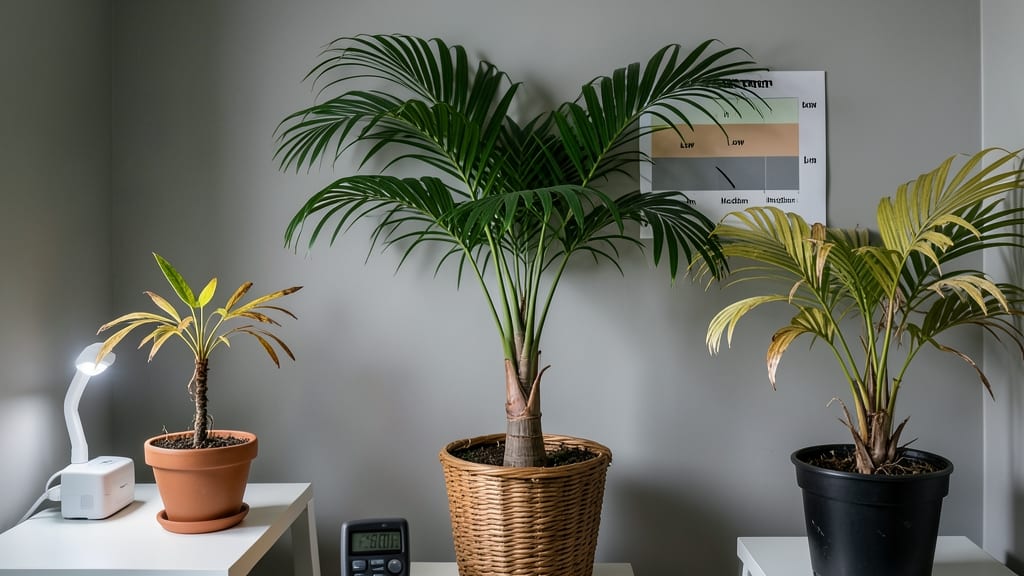
Understanding palm plant light requirements by species
Palm plants aren’t all the same when it comes to sunlight—some thrive in bright indirect light, while others crave direct sun exposure. The key lies in understanding their natural habitats and leaf structures.
For example, parlor palms (Chamaedorea elegans) mimic the dappled light of their native rainforest floors, while date palms (Phoenix dactylifera) bask in the harsh desert sun. Let’s break down the light needs for 10 common palm varieties so you can match your plant to its perfect spot.
Most indoor palms prefer moderate to bright indirect light, which means placing them near a window with sheer curtains or a few feet back from glass. Outdoor palms, on the other hand, often need 6+ hours of direct sunlight daily, especially in cooler climates.
The trick is observing your palm’s leaf color and growth rate—these are dead giveaways about whether it’s getting just the right amount of light.
🌴
| Palm Species | Ideal Light Conditions | Signs of Perfect Light | Signs of Too Much Light |
|---|---|---|---|
| Parlor Palm (Chamaedorea elegans) | Bright indirect light (1,000-2,000 foot-candles) | Deep green fronds, slow steady growth | Brown leaf tips, crispy edges |
| Bamboo Palm (Chamaedorea seifrizii) | Medium to bright indirect light (1,500-3,000 foot-candles) | Arching fronds, vibrant green color | Yellowing fronds, leaf scorch |
| Areca Palm (Dypsis lutescens) | Bright indirect to direct sunlight (3,000-5,000 foot-candles) | Feathery fronds, rapid growth | Brown patches, curled fronds |
| Kentia Palm (Howea forsteriana) | Low to medium indirect light (500-1,500 foot-candles) | Glossy dark green leaves, compact growth | Stunted growth, pale fronds |
| Ponytail Palm (Beaucarnea recurvata) | Full sun to partial shade (5,000+ foot-candles outdoors) | Thick trunk, healthy green leaves | Sunburnt spots, wilted fronds |
If you’re unsure about your palm’s light needs, start by checking its native habitat. For instance, tropical palms like the parlor palm or bamboo palm thrive under filtered sunlight, similar to the light found under a dense canopy.
In contrast, desert palms, such as the ponytail palm, need full sun exposure to mimic their arid environments.
Pro tip: Rotate your palm quarter-turn every 2-4 weeks to ensure even light exposure. This prevents one side from getting too much sun while the other stays in the shade. Uneven light can cause lopsided growth or yellowing leaves, which are clear signs your palm needs a better spot.
For outdoor palms, pay attention to your local climate. In hot, dry regions, provide afternoon shade to prevent leaf scorch. In cooler climates, maximize sunlight exposure to keep your palm healthy and encourage robust growth.
Always monitor your palm’s response to its environment—adjustments might be needed as seasons change.
🌿
Remember, overwatering stressed palms (due to incorrect light) is a common mistake. If your palm’s leaves start turning yellow or brown, it’s often a sign of light stress rather than a watering issue.
Move your plant to a brighter or shadier spot and observe changes over the next 2-4 weeks. Patience and attention to detail are your best tools for keeping your palm thriving.
Signs your palm isn’t getting the right light (and how to fix it)
If your palm plant looks less-than-thriving, the culprit is often light exposure. Too much direct sun causes brown leaf tips, while too little light leads to pale, leggy fronds. The key is finding that sweet spot of bright indirect sunlight—especially for indoor palms.
Start by checking your palm’s leaf color. Healthy fronds should be a vibrant green. If you notice yellowing leaves or dark spots, it’s a sign of overwatering or sunburn. Conversely, if the leaves are light green or yellowish, your palm isn’t getting enough light.
Another red flag? Slow growth or stunted new fronds. Palms need consistent light to fuel their growth. If your plant is barely growing after months, it’s likely light-deprived. Rotate your palm every few weeks to ensure even exposure, especially if it’s near a window.
🌱 Pro Tip: Move your palm closer to a window if the leaves are stretching toward the light—a classic sign of etiolation. If you can’t provide enough natural light, consider adding a grow light for 12-14 hours a day.
Here’s how to diagnose and fix common light-related issues:
⚠️ Warning Signs & Fixes
- Brown leaf tips: Too much direct sun. Move to indirect light or use a sheer curtain.
- Yellowing leaves: Overwatering + too much sun. Reduce watering and adjust placement.
- Pale, leggy fronds: Not enough light. Relocate to a brighter spot or add a grow light.
- Slow growth: Insufficient light. Rotate the plant and ensure it gets 6+ hours of indirect light.
If your palm is outdoors, watch for scorched leaves during peak summer sun. In this case, provide afternoon shade with a canopy or move it to a spot with morning sun only. For indoor palms, avoid placing them directly on a south-facing window sill without protection.
💡 Quick Fix: If your palm is struggling, try this: Place it in a well-lit bathroom or near a skylight. These spots often provide the bright indirect light palms crave without harsh direct rays. Monitor for changes in 2-3 weeks!
Remember, palms are resilient, but they communicate their needs through their leaves. Pay attention to these cues, and you’ll keep your palm thriving year-round. 🌿