
Trees
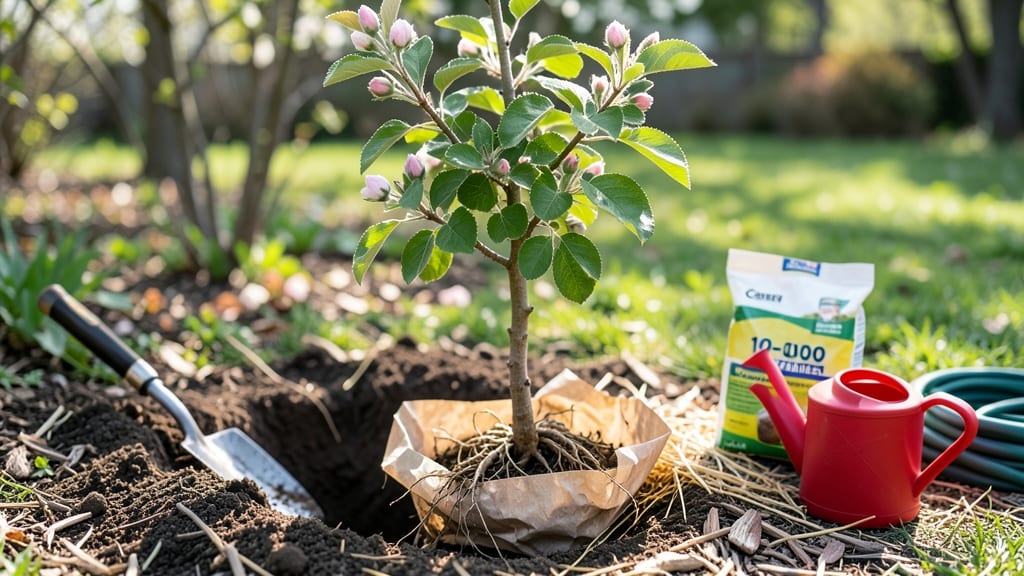
Timing is everything when you're planting an Apple Tree 🍎 in North Carolina—and getting it wrong could mean years of disappointment. The state's unique chill-hour requirements and microclimates mean what works in the Piedmont might fail along the coast, and vice versa.
If you've ever wondered why some apple trees thrive while others struggle, the answer often lies in matching varieties to your specific zone and planting them at the right time.
Whether you're working with bare-root saplings or container-grown trees, knowing when to plant makes all the difference between a bountiful harvest and a sad, leafless stump.
I'll walk you through the ideal planting windows for North Carolina's 6a-8b zones, including how to adjust for unpredictable weather patterns. From understanding chill-hour requirements to choosing the perfect variety for your region, you'll learn exactly when and how to plant for success.
Let's dive into the specifics—because with the right timing, you could be enjoying homegrown apples in just a few years. The key is starting right, and I've got you covered with the essential details to get it done perfectly.
North Carolina’s best planting windows by chill-hour zones (with variety matching)
North Carolina’s climate varies dramatically from the mountains to the coastal plains, creating distinct chill-hour zones that dictate when—and which—apple varieties you can grow successfully.
The state spans 400–1,000+ chill hours, meaning some regions can support high-chill varieties like 'Granny Smith' (800+ hours), while others must stick to low-chill options like 'Zestar!' (400–500 hours).
For most of North Carolina, the ideal planting window is late winter to early spring—specifically February through April—when soil temperatures rise above 40°F and the risk of hard frost diminishes.
This timing ensures roots establish before summer heat arrives, while dormant-season planting (November–January) is also viable for bare-root trees in colder zones like the Appalachian Mountains.
Here’s how to match your USDA zone and chill hours to the perfect planting window and varieties:
| Chill-Hour Zone | USDA Zone | Best Planting Window | Top Varieties | Notes |
|---|---|---|---|---|
| 400–500 hours | Zone 8a–8b (Coastal Plains) | February–March | 'Zestar!', 'Ein Shemer', 'Anna' | Low-chill varieties; avoid late spring planting (heat stress) |
| 500–600 hours | Zone 7a–7b (Piedmont) | February–April | 'Akane', 'Gala', 'Fuji' | Moderate chill; plant early to avoid summer drought |
| 600–800 hours | Zone 6a–7a (Mountains) | November–April (dormant or spring) | 'Granny Smith', 'Honeycrisp', 'Jonagold' | High-chill; dormant planting reduces transplant shock |
| 800+ hours | Zone 5b–6a (High Mountains) | Late March–April | 'McIntosh', 'Cortland', 'Empire' | Cold-hardy; avoid early planting (frost risk) |
If you’re in the Coastal Plains (Zone 8a–8b), prioritize low-chill varieties like 'Zestar!'—they thrive with minimal winter chill but struggle in colder zones. Meanwhile, mountain growers (Zone 6a) can plant high-chill varieties like 'Honeycrisp' as early as November for a head start on root growth.
Always check your local frost dates; for example, Asheville (Zone 7a) averages a last frost around March 15, while Wilmington (Zone 8b) sees frost as late as February 15.
For bare-root trees, plant immediately after purchase—roots dry out quickly. Container-grown trees offer more flexibility but require soil temperature checks (use a soil thermometer; aim for 50°F+). Mulch heavily after planting to retain moisture and regulate soil temps.
In Zone 7b (Piedmont), where chill hours hover around 600, 'Akane' is a standout for its disease resistance and crisp flavor.
Pro tip: Use row covers in early spring if frost threatens. I once lost a young 'Gala' tree to a late April freeze—don’t let that happen to you! Monitor your local NC State Climate Office for real-time updates on frost risks and soil conditions.
Timing isn’t just about the calendar; it’s about microclimates. A south-facing slope in Chapel Hill might be 5°F warmer than a north-facing yard, extending your planting window by weeks. Observe your site’s unique conditions before committing to a schedule.
Finally, avoid planting in summer or fall unless you’re using container-grown trees—root systems struggle to establish in extreme heat or cold. For most NC growers, March is the sweet spot: soil is workable, frost risk is low, and trees have months to establish before summer.
🌱
How to adjust planting timing for North Carolina’s unpredictable weather patterns
North Carolina’s variable climate—from early spring frosts to late-season heat waves—can derail even the best-laid apple tree planting plans. The key to success lies in adapting your timing based on soil temperature, frost forecasts, and microclimate conditions.
Unlike predictable regions, NC’s Piedmont and Coastal Plain can differ by weeks in their safe planting windows.
Always check soil temperature before planting—ideal conditions are 40–50°F for bare-root trees. Use a soil thermometer to avoid planting too early when soils are still cold.
In Zone 6a (western NC), wait until mid-March to minimize frost risk, while Zone 8b (Coastal Plain) can start as early as late February.
🚨 CRITICAL: Planting too early exposes roots to frost heave (when freezing/thawing cycles lift roots from the soil), which can kill young trees. Conversely, planting too late delays root establishment, leaving trees vulnerable to summer drought or heat stress.
Use mulch (straw or wood chips) to regulate soil temperature and retain moisture. Apply a 3–4 inch layer after planting to protect roots during temperature swings. For container-grown trees, plant in early spring or fall to avoid transplant shock from extreme heat or cold.
Monitor frost dates via the NC State Climate Office or local Cooperative Extension. If frost is predicted within 2 weeks of planting, delay until conditions stabilize. In mountainous regions (e.g., Asheville), frost can linger into April, while the Coastal Plain may see fewer late frosts.
Extend your planting window with row covers or low tunnels to protect young trees from unexpected cold snaps. These tools create a 5–10°F warmer microclimate, allowing you to plant 2–3 weeks earlier in high-risk areas like the Piedmont.
Remove covers once buds begin to swell to prevent heat buildup.
Avoid these common mistakes that sabotage apple tree survival: planting in waterlogged soil, ignoring windbreaks for exposed sites, or skipping post-planting watering. Young trees need 1–2 inches of water weekly for the first 2 growing seasons to establish deep roots.
``` ```html⚠️ Warning: Frost Heave & Heat Stress
Planting too early risks frost heave, where roots lift from the soil during freeze-thaw cycles, strangling young trees. Planting too late delays root growth, leaving trees vulnerable to summer drought or heat stress.
Solution: Use a soil thermometer (target 40–50°F) and check NC frost forecasts before planting. In Zone 6a, wait until mid-March; in Zone 8b, late February is safer.